
How do you fluff up an artificial Christmas tree to increase its volume?
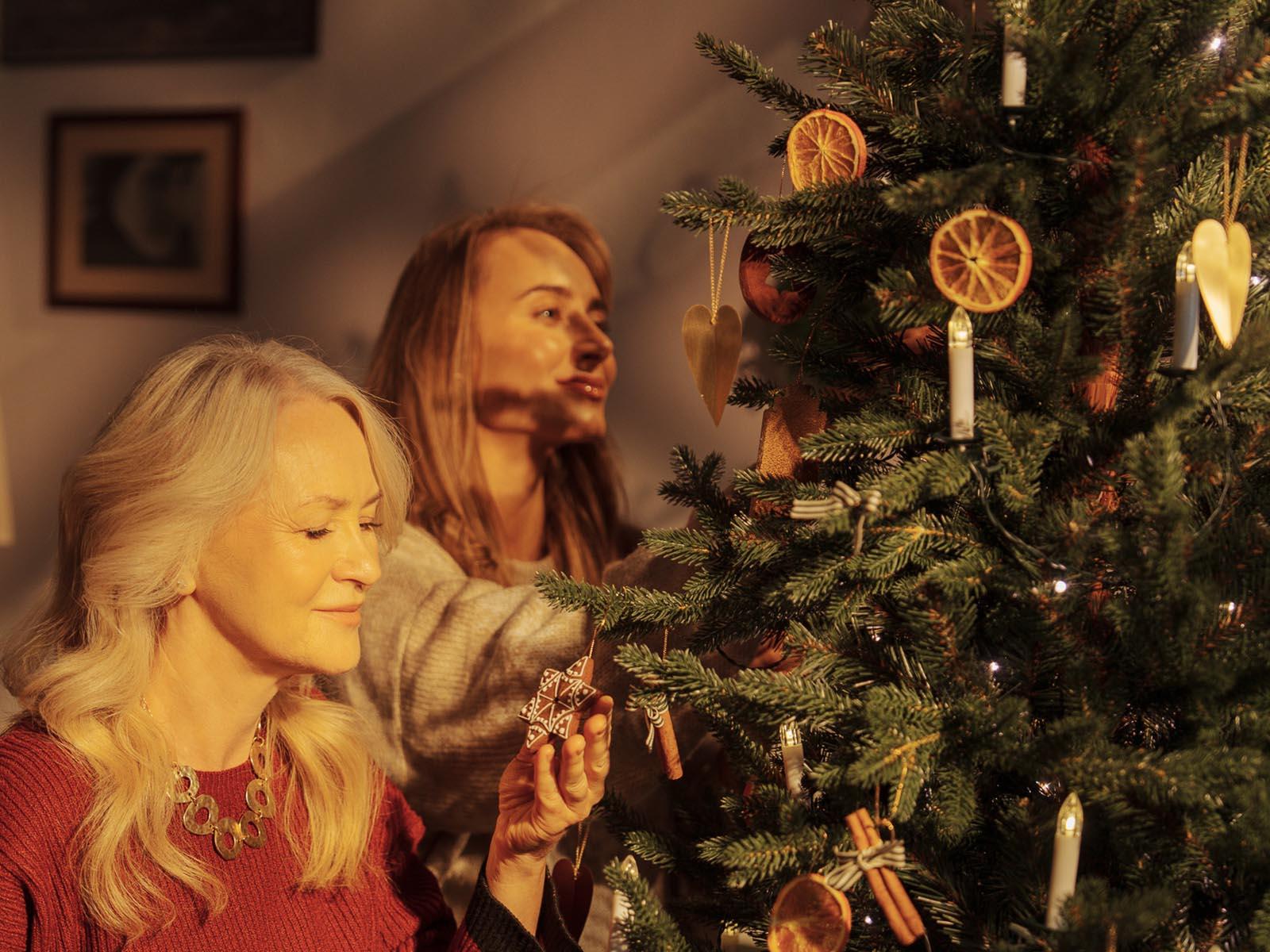
Does your artificial Christmas tree look like it’s been squeezed flat after spending a year in storage? Fluffing, or properly spreading and shaping the branches, can work wonders. And you don't need to be a professional decorator to achieve a great result. All you need is a little patience and a few proven tricks. Check out how to shape your Christmas tree step by step and give it volume. We have specific ways to do this!
-
Spreading and shaping the branches is the key to making an artificial Christmas tree look natural and dense. Properly spread branches hide the trunk, fill the shape, and create a compact, decorative structure. Without this, even the most expensive model can look poor.
- Start from the trunk and work your way outward. Shape each branch separately, from the trunk outwards, section by section. It's tedious work, but it gives the best results.
- Decorations, lights, and garlands can make the tree look denser. If you still see gaps after fluffing, thick garlands, baubles, and lights placed deeper, closer to the trunk, will help.
You take your artificial Christmas tree out of the box or bag and what do you see? Flattened branches and a sad, tired shape, far from fabulous? Don't worry – this is not a product defect, but a natural effect of storing the tree after Christmas. And the good news is that everything can be improved. This is where the fluffing technique comes in, it transforms the entire look of the tree. It's like styling your hair before an important meeting – without it, there's no “wow” effect.
In this article, we show you step by step how to “fluff” your Christmas tree so that it looks dense, elegant, and realistic. Ensuring every detail is covered.
Table of contents:
-
What is Christmas tree fluffing? And why is it worth “fluffing” an artificial Christmas tree?
-
Fluffing in practice, or proven methods for a dense artificial Christmas tree
-
Fluffing as the secret to the perfect FairyTrees artificial tree

What is Christmas tree fluffing? And why is it worth “fluffing” an artificial Christmas tree?
Fluffing is the process of spreading and shaping the branches of an artificial Christmas tree to give it a full, natural look. It involves spreading each branch in different directions so that it fills the space and covers the trunk. Thanks to fluffing, the tree looks lush and realistic, even before you hang the first decoration on it. A well-fluffed artificial Christmas tree can look like a real one – it is often difficult to tell it apart from a real Christmas tree, especially when we take care to arrange the branches.
A well-fluffed Christmas tree:
-
has no empty spots or visible gaps – it looks denser, fuller, and more natural, as if it had just been brought from the forest;
-
forms a full cone – the spread-out branches fill the entire space, covering the trunk and creating the illusion of a real tree; each artificial Christmas tree consists of several parts that form a complete tree when assembled;
-
holds decorations better – the branches create a stable structure for lights and baubles, so everything is distributed evenly and stays in place more securely;
-
looks elegant even without decorations – it retains its even density and nice shape.
It is worth remembering that different models of Christmas trees may have different branch spreading systems – from classic ones to quick automatic spreading systems, which greatly facilitate fluffing and shaping the tree.
Note: the first fluffing is the most important
If you take the time to shape the tree, the following years will be easier. An artificial Christmas tree, or rather its material, has a certain “memory.” If you then carefully fold the tree for storage, many of the branches will return to a similar position next season (remember that folding the tree after the season should be done according to the instructions to preserve the shape of the branches! Then you will only need to make minor adjustments to the shape, instead of starting from scratch. That is why it pays to do it calmly and thoroughly the first time around.
The first unfolding of the branches can take from 45 minutes to even several hours, depending on the size and density of the tree. But don't rush! Accuracy gives the best results.
How to prepare for fluffing?
Before you start arranging the tree, prepare the space and make sure you are comfortable. This makes the whole process easier and simply more convenient. Before you start, check the contents of the package – make sure that all components, such as the stand and tree parts, are in place.
Take care of yourself first. Both artificial and real Christmas trees can scratch and cause abrasions on your hands and forearms, especially during long periods of work, so:
-
put on gloves, e.g., gardening or winter gloves (at FairyTrees, we include protective gloves with every Christmas tree),
-
wear long sleeves, which provide additional protection for your hands when reaching deep into the tree,
-
prepare a stool or ladder if the tree is over 2 meters tall.
Don't forget about your surroundings. The right working conditions are invaluable, so:
-
place the Christmas tree in a location that allows access from all sides,
-
move the furniture away so that you can take a few steps back to assess the effect,
-
find an inspirational photo of your model in an online store – you can see different models of Christmas trees, their accessories, and how they are assembled; some Christmas trees are designed with branches pointing upwards, others with slightly drooping branches (e.g., in the style of a Caucasian fir).
Finally, decide whether you will set up the Christmas tree alone or with someone else. There are two approaches:
-
one person forms the whole, so that the Christmas tree has a consistent appearance from all sides,
-
with a large tree, it is sometimes worth asking someone for help, the work goes faster, you can spend time together and play Christmas carols to set the mood.
And if the tree has been lying in a box for a long time, gently dust the branches, especially near the trunk. This will prevent you from stirring up dust while you work (this is especially important if you have allergies).
So, shall we get started?

Fluffing in practice, or proven methods for a dense artificial Christmas tree
Most artificial Christmas trees consist of two or three parts that need to be put together. However, before the tree becomes stable and ready for decorating, it is worth approaching the assembly methodically.
1. Always start shaping from the bottom of the tree
Always start shaping the tree from the bottom: place the lower part in the stand, make sure that the legs of the stand are firmly planted on the floor, and then screw it tight. The trunk of the tree should be firmly secured in the stand to ensure safety and aesthetics. Now you can start shaping the branches in the lower part, even before you attach the next section. Is your model tall and does the lower segment have several layers of branches? You can temporarily tie the crowns from the upper layer with string or ribbon. When they are pulled towards the trunk of the tree, they will not interfere with the arrangement of the lower layers.
Now it's time for some specific fluffing techniques. We will be working on the so-called crowns, i.e., the branches that are directly attached to the trunk. So let's move on to the next step - how to unfold an artificial Christmas tree section by section.
2. Shape each main branch and twig separately
Grasp the crown at the base and spread it out more or less perpendicular to the trunk (at an angle of about 90°) or slightly diagonally - so that the tree gains width. In models with an “umbrella” system, the branches will fall down on their own. Just check that they are indeed in an almost horizontal position, especially at the bottom. The method of unfolding the branches depends on the design and technology of the Christmas tree – depending on the model, some elements may require a different approach.
Now take a look at a single crown. Can you see how it branches into smaller and smaller twigs? First, take care of the part closest to the trunk – lift or tilt the smaller inner twigs upward so that they are more vertical and fill the space around the trunk.
Are the branches near the trunk ready? Start spreading the larger branches, moving from the trunk to the tips of the crown. Holding the stem, use your other hand to spread each branch attached to it in all directions. We recommend spreading the branches according to the manufacturer's instructions for the best end result.
-
Pro tip! Treat each individual crown as if it were a small tree itself. Spread its tips to the sides and at different angles to resemble a miniature version of the entire Christmas tree. The standard technique is to arrange the branches alternately: point one to the left, the next to the right, the next upwards, and the next (if there is one) slightly downwards.
When you have finished shaping each branch, take a look at its tips. It is good practice to spread the last branches out in a “star” shape – that is, to the sides and up/down.
-
Pro tip! You can bend the tip of each branch slightly to create a small hook. Firstly, it imitates the natural bending of a branch under the weight of snow or pine cones. Secondly, it makes it easier to hang baubles and prevents the decorations from sliding off.
The last row of Christmas tree branches should be spread out in a star shape, which gives it an aesthetic look. Once the first crown in the lower section is ready, move on to the next crown and repeat the above steps. Are all the crowns on a given level well arranged? Great! Loosen the upper level (if it was tied with string for convenience) and move on to the next level. Continue this way until you reach the end of the entire lower section.

3. Work your way up, section by section
First section ready? Move on to the next segment. Once you have secured the middle section, start shaping it right away. It is best to work systematically and not move on to the next section until the current one is ready. The time needed for shaping depends on the size and type of Christmas tree. This order gives you more control over the final shape of the tree.
-
Pro tip! For medium-sized Christmas trees, the rule “one to the left, one to the right, one up” works well. If the crown has even more branches, the next ones can again be directed alternately downwards or diagonally.
Work with each branch layer separately, moving from the bottom to the top of the tree. Skipping or rushing any of them can leave a visible hole or asymmetry. Also, make sure that the branches do not line up in a straight line. A monotonous arrangement makes the tree lose its natural look.
And if the tree seems uneven at first, don't worry! You can make adjustments later. For now, focus on spreading each branch out nicely.
4. Comb and fluff up the needles
Artificial needles, especially those made of PVC, tend to flatten during storage. Room temperature usually softens them slightly after taking the tree out and allows them to regain their shape.
However, if you see that the needles are still flattened, you can “wake them up”: hold the branch with one hand and run the other hand along the needles “against the grain.” This movement causes the flat needles to move away from the branch and stick out in all directions, restoring volume.
-
Pro tip! You can also slide your gloved hand between the needles and move the branches back and forth at the trunk. This movement will further “ruffle” the needles to the sides.
5. Evaluate your progress as you work
Every few minutes, stop, take a few steps back, and look at the tree from different angles. This is an important step: looking from a few meters away and from different sides of the room, you will immediately see if there are any empty spaces, asymmetries, or overly compressed branches.
Pay attention to whether the tree also looks good from the back and sides. Many people place their Christmas tree in a place that is visible from several sides, so it is worth ensuring an even effect. If you notice that one part seems sparser, spread additional branches there or move others slightly in its direction.
6. Go for natural irregularity
At this stage, you don't have to achieve perfection yet. The final appearance of the tree will change after you hang the lights and decorations. The most important thing is to achieve a full, balanced shape that will be a good base for decorations.
Also, remember that the goal is to achieve a natural look for your artificial Christmas tree, not perfect symmetry down to the millimeter. In nature, branches are not arranged perfectly evenly, so slight differences in the arrangement of the twigs add realism. Each Christmas tree model also has its own style: some species have more upright branches, others more drooping ones. If one sticks out a little differently, it can be an advantage rather than a disadvantage.
A well-formed Christmas tree should look balanced, with no area attracting excessive attention due to a lack of branches or an excess of them. Does your Christmas tree look like this? Well done, fluffing is complete! Now you can start decorating.

How can decorations make a Christmas tree look denser?
Some Christmas tree models are naturally sparser, while others have fewer branches in the middle. Instead of trying to mask them, use decorations! They will fill in the empty spaces and add volume to the tree.
Good solutions include:
-
additional artificial twigs or decorative spikes – you can insert them into the tree where there is a visible gap between the branches. Such spikes often have additional elements, such as holly, pine cones, or even artificial snow. Artificial pine or eucalyptus branches will also work.
-
green garlands – choose dense models, preferably in a shade similar to the branches of your Christmas tree. Wrap them spirally around the trunk from the center upwards to imitate additional layers of branches. This will fill the space from the inside and enhance the impression of depth.
-
wide ribbons – introducing such elements between the layers of branches creates a structure that looks more multidimensional.
-
large baubles – if you hang them closer to the trunk, they will not only cover the gaps, but also create a spatial effect. Larger decorations draw the eye to the interior of the tree, and their shiny surface reflects light, further enhancing the impression of depth.
-
properly spaced Christmas tree lights – place the lights not only on the outer branches, but also deeper inside the tree. You will achieve subtle light in the depths of the composition. Additionally, you can use the “umbrella” method, which involves running the cables from top to bottom in straight lines to create vertical bands of light. This type of lighting will emphasize the structure of the tree and make even a less dense Christmas tree look impressive.
-
real plants – placed around the base of the tree can enhance the fullness of the composition and add a touch of nature to the arrangement.
Something still seems off after fluffing the tree? See how to solve common problems related to shaping the tree. We have prepared a handy cheat sheet!
Fluffing as the secret to the perfect FairyTrees artificial tree
After applying these techniques, your artificial Christmas tree should look really great. It will be dense, fluffy, with a natural shape, without gaps and with an invisible structure. It is fluffing that makes the biggest difference between a tree “straight out of the box” and one that can easily pass for a real fir tree. The effort you put in will quickly pay off. A well-fluffed Christmas tree will allow you to enjoy its beauty throughout the holiday season, emphasizing the unique atmosphere in your home.
Did you know that FairyTrees artificial Christmas trees are designed for easy shaping? The well-chosen length of the needles, density, and branch structure ensure that the fluffing effect lasts for seasons to come.
Let the spreading of the branches be a peaceful start to your preparations, followed by the pleasure of decorating the tree. Have a merry and magical Christmas with a beautifully decorated Christmas tree!