
Why reindeer change eye color? In winter, they hold even more magic
Reindeer immediately evoke images full of Christmas charm. Crunching snow, frosty air, the soft glow of lights, and that unique atmosphere that only appears in winter. That’s exactly why it’s so easy to believe that these extraordinary animals hide something more than just their charming appearance. Scientists have discovered that in winter, reindeer’s eyes reflect light differently than in summer. It’s one of those curiosities that sounds like a passage from a Christmas story, yet has a very concrete explanation in nature.
- In winter, reindeer eyes reflect light in blue tones, and in summer in warmer, golden tones. This effect is real and has fascinated researchers and nature lovers for years. The change in the color of reindeer eyes helps them see better in winter conditions when the landscape is covered in snow.
- This seasonal change helps reindeer navigate the Arctic twilight more effectively. As a result, their vision copes better during the long winter and in low light. Reindeer live in areas where the polar night occurs, and the amount of light there is significantly limited during the long winter months.
- This phenomenon easily sparks the imagination, as it combines science with something almost fairy-tale-like. No wonder reindeer are so strongly associated with the magic of the holidays. What’s more, reindeer are the only animals that change the color of their eyes depending on the season, which gives them an advantage in surviving these harsh conditions. This colour shift is a unique adaptation among mammals, allowing reindeer to spot food and predators more easily in the challenging Arctic landscape.
There are certain winter curiosities that fit December perfectly. They smell of the forest, twinkle like lights on a Christmas tree, and bring back a childlike sense of wonder for a moment. Reindeer and their extraordinary eyes undoubtedly belong to this category.
Because even though it sounds like a legend told around the Christmas table, reindeer really do change the way their eyes reflect light. It sounds like a beautiful metaphor for winter, yet there is a real phenomenon behind it, observed by scientists. Nature proves once again that it can create the most beautiful stories.
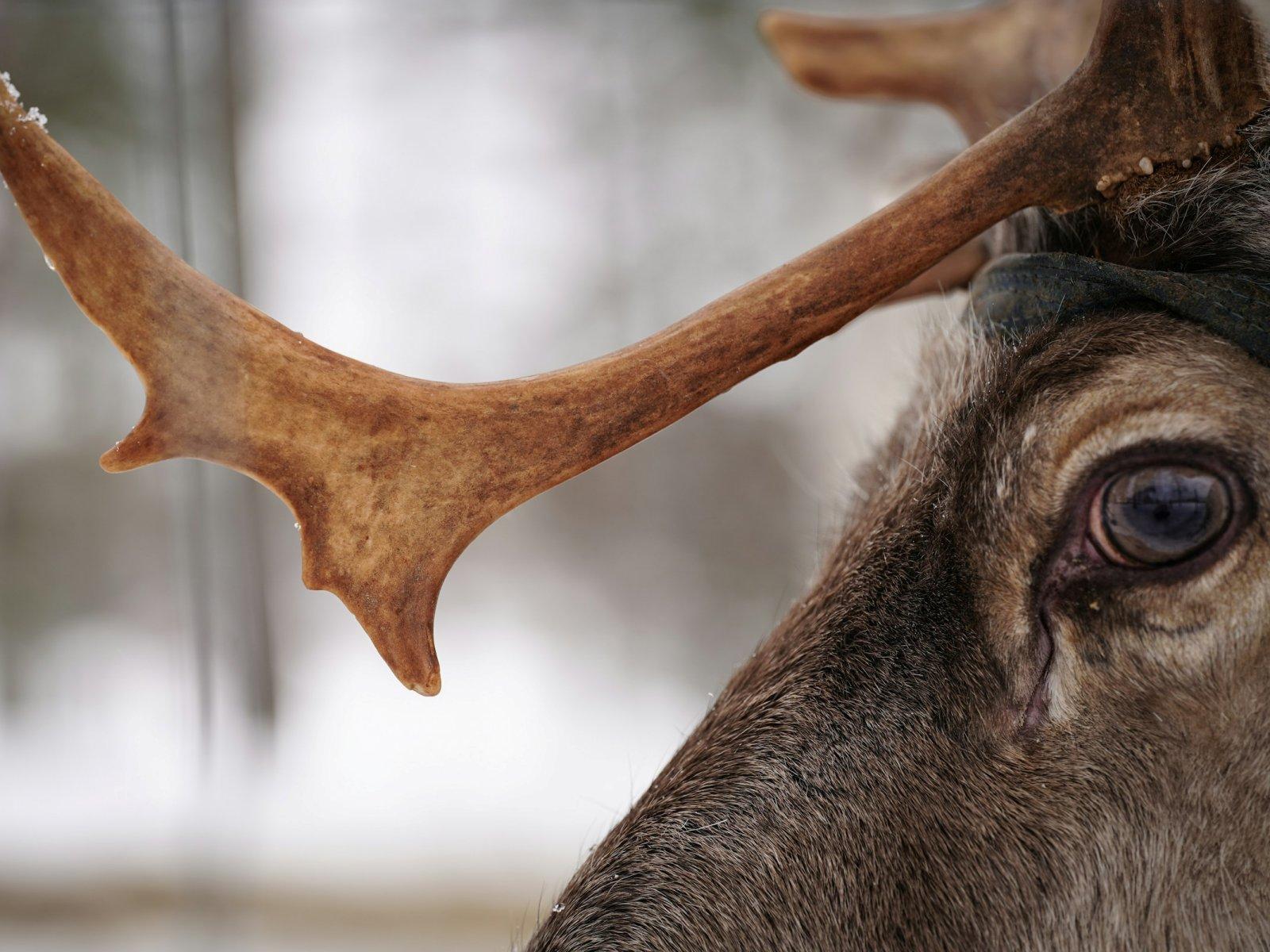
A close-up of a reindeer’s eye and antlers against a bright winter background. Source: Sophie Renevey / Unsplash.
Do reindeer’s eyes really change color?
Yes, but it’s worth putting it simply and precisely - depending on the season, physical changes occur in reindeer’s eyes, specifically in their eye structure, that affect how light is reflected. These changes are an adaptation to lighting conditions - in summer, their eyes are golden-orange, and in winter, they turn blue.
In many articles, you’ll come across the statement that reindeer eyes change colour. This is a shorthand that captures the essence of this interesting fact, but from a scientific standpoint, the matter is a bit more nuanced. It’s not about the iris, but rather the light reflected from inside the eye due to structural adaptations. This adaptation helps reindeer spot predators in low-light conditions.
What exactly changes in a reindeer’s eye?
Inside a reindeer’s eye is a special layer called tapetum lucidum, which helps utilize even very dim light. When light enters the eye during twilight, rays that aren’t immediately captured can reflect and pass through the eye once more.
Tapetum lucidum is a membrane, also known as the reflective layer, which is composed of collagen fibres and is located behind the retina. The structure of these collagen fibres changes under the influence of pressure inside the eye, especially in winter, when reindeer have their pupils wide open due to the lack of light. During the dark Arctic winter, reindeer pupils are constantly dilated, increasing internal eye pressure. This increased pressure causes the collagen fibres to pack more tightly, which shifts the reflection from golden in summer to blue wavelengths in winter. The membrane thus reflects light back onto the retina, giving reindeer eyes a second chance to capture photons in low light.
This mechanism is responsible for reindeer’s effective vision in low light and thus enhances the animals’ visual acuity. Interestingly, these changes result in increased sensitivity to ultraviolet light and UV rays. In other words, reindeer’s eyes function like night vision goggles, allowing them to see better in the ultraviolet spectrum.
From our perspective, the change in the color of the membrane inside the eye is minor, but for the reindeer, it has practical significance. It is a huge help in places where the days are short for weeks on end and the landscape is shrouded in twilight.
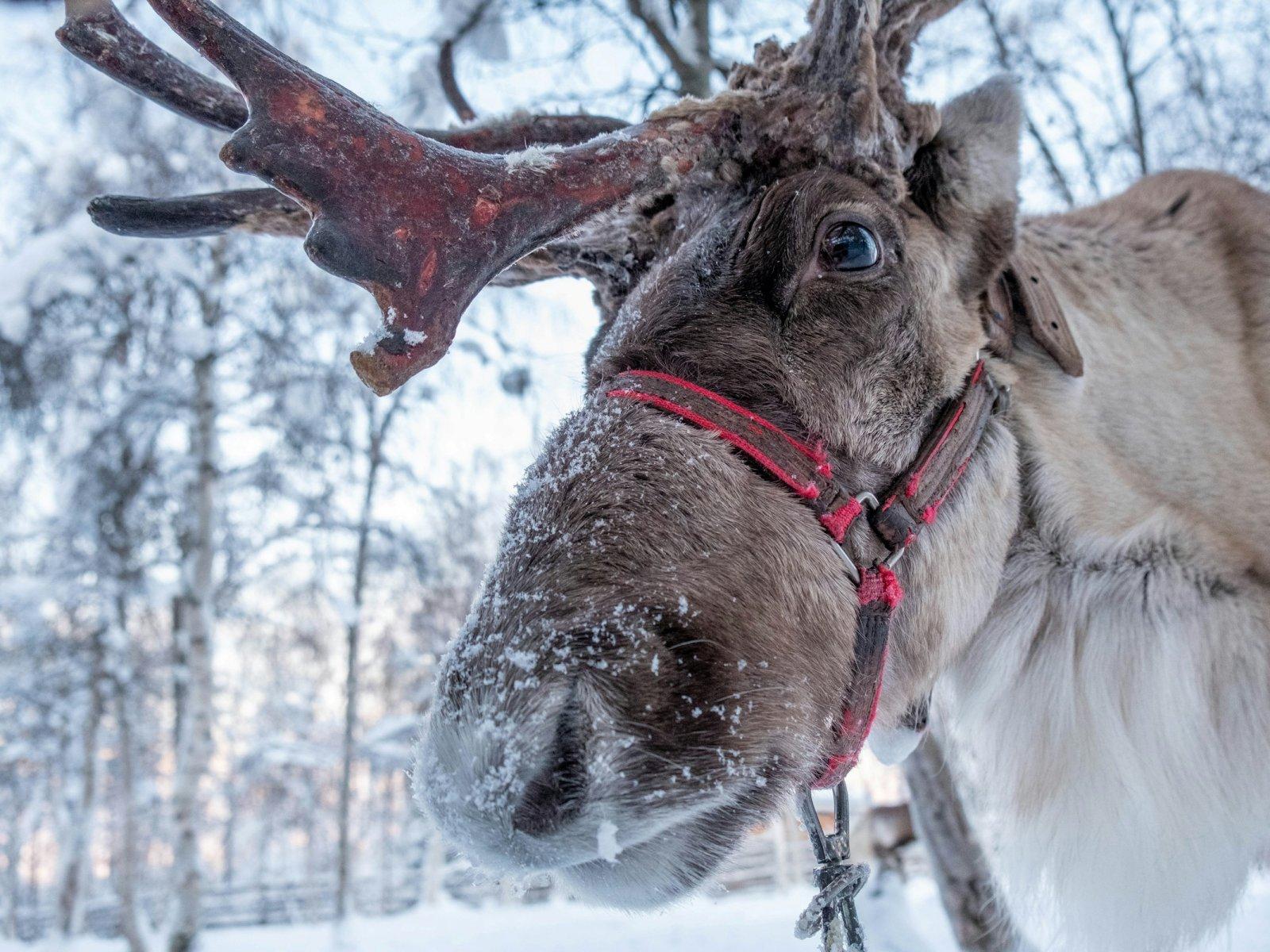
A reindeer with a frosty muzzle and a visible eye against the backdrop of a snow-covered forest. Source: Nikola Johnny Mirkovic / Unsplash.
Why do their eyes take on a blue tint in winter?
In winter, reindeer live in very dim light, especially during the dark winter months. The days are short, there is little sunlight, and for much of the time, the surroundings remain dim. The Arctic winter has cool, subdued, diffused light - completely different from the summer glow. During this season, the blue light that dominates the sky during twilight is created by the sun’s low position near the horizon, resulting in unique lighting conditions. More than a third of the day can be spent in twilight, with the sky taking on a deep blue hue. Reindeer living in such cold and ice-covered landscapes must cope with long hours of low light, which more closely resembles a lingering twilight than a full day.
Researchers concluded that the blue, or even deep blue, hue of the eyes’ winter reflection helps reindeer make better use of the blue wavelengths present in the Arctic environment. The color change is an adaptation to very cold conditions and allows for better vision in limited light by increasing sensitivity to ultraviolet radiation. Blue eyes make reindeer approximately 1,000 times more sensitive to light than their golden summer eyes.
The blue hue blends better with the winter environment and helps them make use of what can still be seen in the landscape. The blue light in winter twilight allows reindeer to notice their food, lichen, more clearly against the snow, especially since green is largely absent from the twilight spectrum. Wolf fur, like lichen, appears dark against the snow in blue twilight, aiding camouflage. Like other adaptations, the change in eye color and other adaptations work together to enable survival in harsh, cold conditions and provide a better view in low light. This is one of the reasons why reindeer thrive where conditions would simply be too difficult for many other animals.
Does the change in eye color help reindeer see better?
Yes, this is precisely where the greatest significance of the entire phenomenon lies. Research by scientists shows that reindeer have developed abilities that allow them to cope exceptionally well both in constant darkness and when it is light 24 hours a day. In winter, reindeer’s eyes become more sensitive to light, allowing them to capture more light and gain a better view in low-light conditions. This adaptation helps reindeer detect food and predators even when visibility is poor. The process involves the reindeer letting fluid adjust within the eye, which changes the pressure and the reflective properties of the tapetum lucidum - similar to how increasing traction by changing tires helps vehicles handle icy roads. This structural change enables reindeer to adapt their vision for the dark Arctic winter.
Reindeer have the most adaptations for vision in harsh conditions among most mammals, which gives them an advantage over predators and allows them to protect themselves more effectively. While many animals, such as wolves, have adaptations for low-light vision, reindeer are unique among most mammals for their seasonal eye color change. Reindeer live in areas where they can find food even under difficult conditions, thanks to their ability to transmit ultraviolet light through their eyes. This helps them find food in snowy environments, as the snow reflects UV light and makes lichen more visible. However, the change in the color of the eye’s layer does not mean that reindeer can see in complete darkness. Rather, it allows them to cope better in the dim, winter light, effectively increasing traction and visibility during the dark months. This adaptation helps them survive. Low light makes it difficult to move around, search for food, and detect movement in the surroundings. Reindeer feed on a specific species of lichen (Cladonia rangiferina), which strongly absorbs UV light, allowing them to see better in the snow-covered nighttime landscape. Thanks to their extraordinary vision, reindeer can spot the lichen from a distance in the winter darkness, allowing them to conserve energy on their journeys in search of food.
This is where science meets winter imagination. Because while we think of reindeer in the context of holidays, sleighs, and frosty skies, nature shows us that their uniqueness is very real.
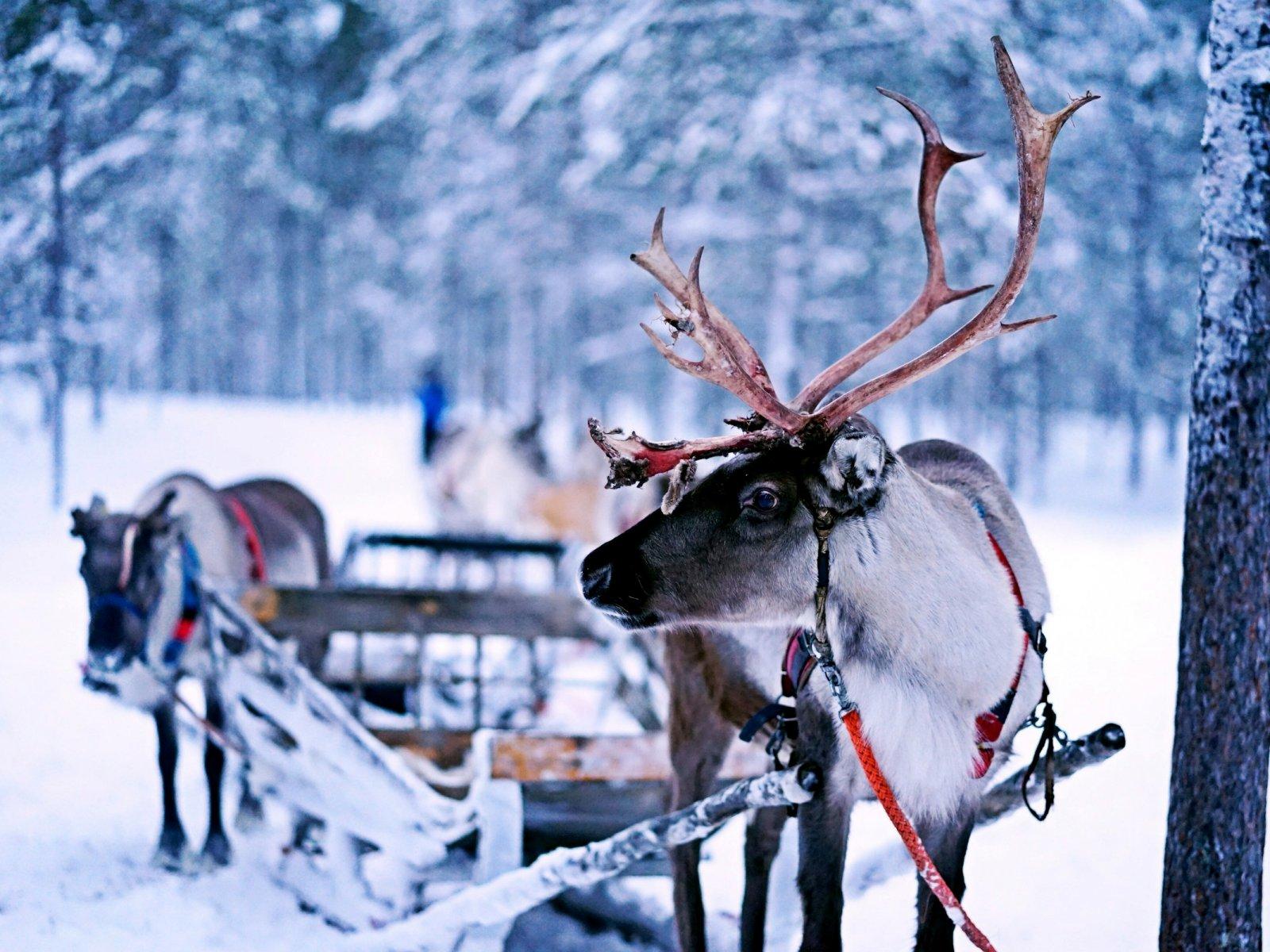
A reindeer harnessed to a sleigh in a snow-covered forest. Source: Norman Tsui / Unsplash.
Where does the popularity of this interesting fact come from?
There are animals that evoke sympathy, and there are those that trigger images, emotions, and memories. Reindeer belong to the latter group. A single association is enough to conjure up a December evening, a soft blanket, warm tea, and the glow of a Christmas tree.
The fact that their eyes turn blue in winter fits perfectly with this mood. It carries the chill of an Arctic night, the hue of light-reflecting snow, and something very close to the magic of Christmas. That’s why this topic resonates so well in winter, when we’re looking for stories that are beautiful, lighthearted, and a little bit extraordinary.
Reindeer remind us that nature can surprise us more subtly than the best fairy tale. Sometimes a single glance is enough to see something truly special in it.
Reindeer’s eyes actually reflect light differently in winter and summer. As mammals, reindeer display a unique adaptation: their eyes change colour seasonally, a feature not seen in other mammals. This colour shift is an evolutionary advantage that helps them survive in the low-light Arctic environment. This phenomenon helps them function better in the dim northern light and perfectly illustrates how cleverly nature adapts animals to their living conditions.
Reindeer are the only animals known to change the color of their eyes in winter—their eyes have evolved in response to environmental conditions, allowing them to see better in harsh weather.
And yet, it’s hard to resist the impression that this is one of the most beautiful winter curiosities. Reindeer already have something special about them, and when we add eyes that reflect the blue of the Arctic winter, the whole story takes on an even more beautiful, festive glow.
Sources:
-
Stokkan K-A, Folkow L, Dukes J, Neveu M, Hogg C, Siefken S, Dakin SC, Jeffery G. 2013, “Shifting mirrors: adaptive changes in retinal reflections to winter darkness in Arctic reindeer”.
-
Fosbury RAE, Jeffery G. 2022, “Reindeer eyes seasonally adapt to ozone-blue Arctic twilight by tuning a photonic tapetum lucidum”.
-
Hogg C, Neveu M, Stokkan K-A, Folkow L, Cottrill P, Douglas R, Hunt DM, Jeffery G. 2011, “Arctic reindeer extend their visual range into the ultraviolet”.
-
Tyler NJC, Jeffery G, Hogg CR, Stokkan K-A. 2014, “Ultraviolet Vision May Enhance the Ability of Reindeer to Discriminate Plants in Snow”.
Main photo:
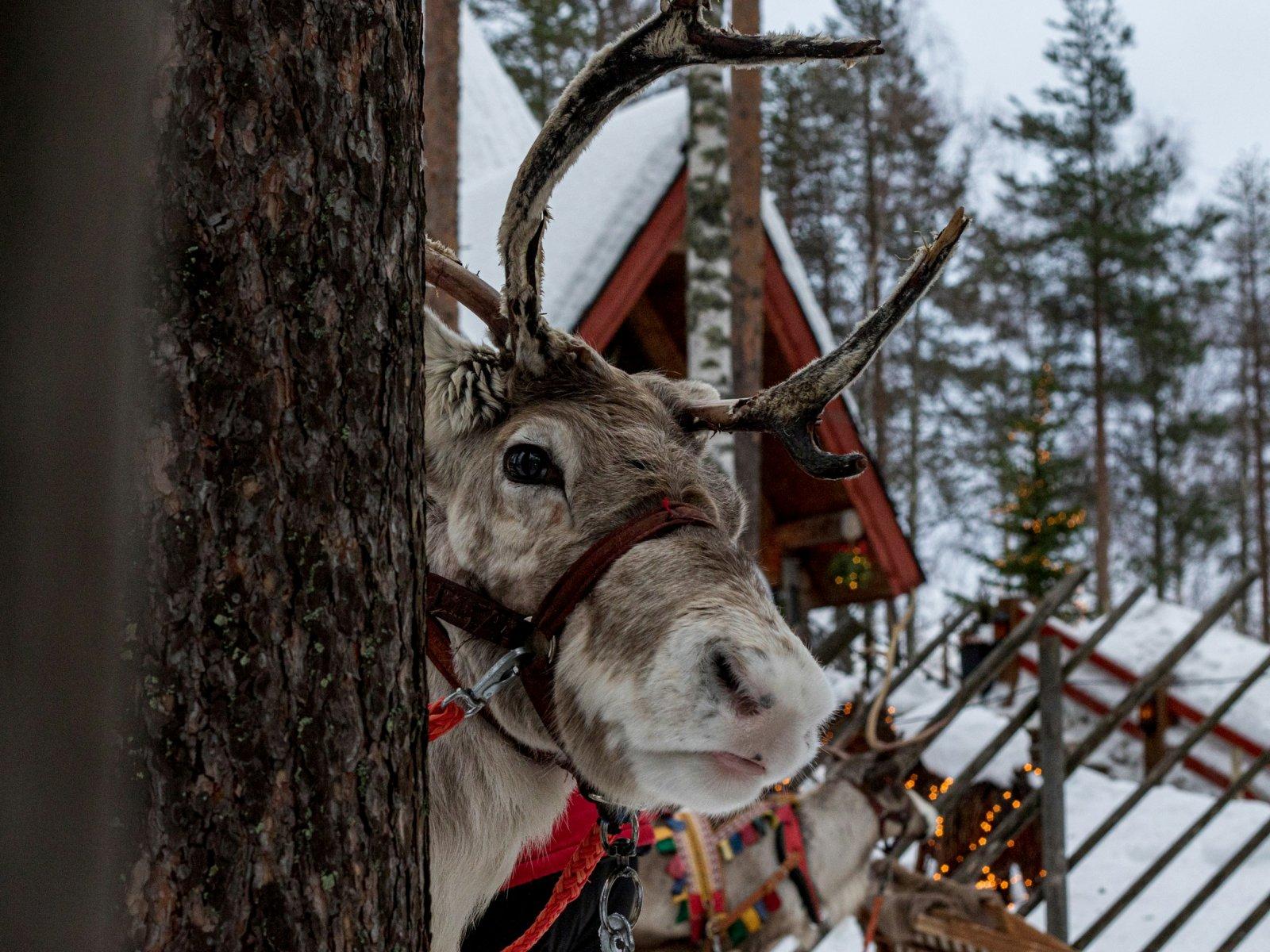
A reindeer peeking out from behind a tree trunk against a snowy backdrop with a wooden cabin and a sleigh in the background. Source: Shepherd / Unsplash.