
Meaning of the Star Symbol: Why We All Want to Get a Star for Christmas?

First, we think of December. Of the Christmas tree, the smell of baking, and that one moment when someone looks out the window and asks if the first star has appeared in the sky. This is where the power of this motif comes from. From the very beginning, the symbol of the star has been associated with family, hope, and closeness. For hundreds of years, the star has been a source of mystery and inspiration, symbolizing distant worlds and the unknown aspects of the Universe. It also extends into other areas of life: it appears in gastronomy, the military, pop culture, astronomy, on flags, in jewelry, and… in everyday text. Star symbols have ancient origins and have held significance across many cultures throughout history. Today, star symbols are used extensively across digital and print media, making them a prevalent element in modern communication and design. Each time, it carries meaning, sparks dreams, and reminds us that humans have long sought signs to make sense of the world.
- The symbol of the star takes deepest root in the family imagination during Christmas. The Star of Bethlehem, the first star, and the lights on the Christmas tree form the emotional starting point for the entire text.
- Later, the star takes on a broader life and becomes a symbol of prestige, power, direction, fame, and hidden information. That is precisely why this symbol is so enduring in culture and so easily understood in everyday life, with its significance recognized in different cultures around the world.
- When we ask what the symbol of the star means, we are also asking about the human desire for distinction, security, and meaning. This motif offers hope, gives structure to dreams, and allows us to speak of the future with greater tenderness.
When the question arises about what the star symbol means, most people don’t start with a definition. They start with a memory. Of the family table, of the Christmas tree with its sparkling top, of children looking up at the sky for the first sign of evening. The star very quickly evokes home, holidays, and closeness. It is in this setting that the symbolism of the star becomes something familiar and warm. Star symbols are geometric shapes that represent celestial stars or their stylized forms, and in many traditions, they are also seen as metaphors for the soul - symbolizing brightness, eternity, and the soul’s potential.
Only later do we see how widely this motif has spread across the world. The symbol of the star appears in gastronomy as a reward for excellence, in the military as a sign of rank, in astronomy as a guide, in Hollywood as a promise of fame, and in typography as a small mark leading to a footnote. In many places, the star symbolizes hope, a beautiful future, wisdom, and the desire to be noticed. For this reason, its meaning is so rich, and the symbolism itself so enduring in culture.
Table of Contents:
-
What does the symbol of the star mean in the home and in holiday traditions?
-
What does the symbol of the star mean in culture, beliefs, and everyday objects?

What does the symbol of the star mean in the home and in holiday traditions?
The most familiar aspect of this motif emerges during the holidays. The star appears atop the Christmas tree, above the table, on wrapping paper, on napkins, and on cards. Often, it becomes the most important decoration in the home, as it embodies light, radiance, and the peaceful anticipation of a family evening.
Throughout history, stars have also played a crucial role in helping civilizations navigate, mark the passage of seasons, and define calendars. Observing the stars was essential for understanding seasonal changes and organizing agricultural practices, making the star a timeless symbol of guidance and timekeeping.
In Christianity, the Star of Bethlehem, described in the Bible, symbolizes the birth of Jesus Christ and guided the Three Wise Men to the Savior’s birthplace. In the Christian faith, the Star of Bethlehem is a symbol of hope and guidance - according to the Bible, it was the light that showed the Magi the way to Jesus, bringing people hope and spiritual light.
In many homes, the Star of Bethlehem is the first image that comes to mind when we talk about Christmas. Its appearance opens the story of a journey, of hope, and of how a bright light can draw people together.
In family memory, the symbolism of the star holds great significance. It connects everyday life with something greater, yet remains close and gentle in its message. Children learn that the star shines over the house like a promise that something good is about to happen. Adults see in it peace, unity, and love, which momentarily bring order to the December rush. Many myths describe stars as ancestors, heroes, or divine eyes watching over the world, shaping religious symbolism and reinforcing the star’s spiritual and protective significance. This image stays with us for a long time, which is why we later recognize the same symbol so easily in other areas of culture.

In olden times, the star protected the home from evil spirits, brought good luck, and helped tame the darkness. Hung above the entrance or placed over the table, it was a symbol of light and hope for a good year. In many families, this is precisely why the star is often worn even outside of the holidays, perhaps as a small pendant or a delicate ornament. This symbol, known for generations, still works in much the same way: it provides a sense of security, inspires dreams, and reminds us that even in the darkness, a bright spot can be found.
What does the symbol of the star mean in culture, beliefs, and everyday objects?
If we look more broadly at what the star symbol means in various aspects of life, the answer becomes surprisingly rich. In the world around us, in Western culture and beyond, the star is often a symbol of beauty, harmony, destiny, wisdom, hope, infinity, and truth. In poetry and art, it signifies inspiration, the future, awakening, the pursuit of ideals, and a longing for something greater than mere everyday life. As an element of art and literature, the star represents the highest beauty and the search for deeper meaning and understanding. It’s no wonder it so often finds its way into the items we keep close to us.
In jewelry, the star has become an exceptionally enduring motif. It appears in necklaces, earrings, and rings because it effectively combines delicacy with a bold message. Stars in jewelry can take various forms - from delicate and subtle to more bold and decorative. Stars are categorized by the number of points they have, and these categories influence both their visual representation and symbolic meaning. For example, the eight-pointed star is a common motif in Islamic art, symbolizing harmony and cosmic order. They symbolize power, success, growth, strength, vitality, as well as infinite possibilities and a spiritual purpose. Star-themed jewelry is often chosen by people who want to pursue their dreams and have many plans for the future. It can be made of natural gemstones or precious metals, which highlights its brilliance and significance. Such a piece is sometimes worn as a keepsake, a gift, or a talisman, as well as a symbol of remembrance for loved ones who have passed away. In the jewelry industry, the symbolism of the star refers to the dream of beauty, to one’s inner light, knowledge, and the desire to stay true to one’s own path.
The star motif has also become deeply rooted on flags. The star appears on many national and regional flags, where it serves as a symbol of community, aspiration, or historical memory. It is often a symbol of freedom, unity, and the future that a given community envisions for itself. In this context, the meaning of the star becomes more public, yet it still carries the same core: radiance, direction, hope, and vitality.
In popular culture, the image of a shooting star is equally powerful. This motif immediately evokes luck, wishes, and quick dreams whispered under one’s breath. A shooting star does not last long, but it leaves an intense impression on the imagination.
Many people associate it with destiny, hope, and that brief moment when the future seems more open. Alongside it appears the morning star, known for centuries as a sign of a new beginning. In this sense, the star symbolizes awakening, the light of morning, and the gentle promise that day follows night.
It is worth noting that the arrangement of stars in the sky is called constellations - there are currently 88 official constellations, whose names originate mainly from antiquity. The concept of a constellation dates back to the Babylonian period, where prominent arrangements of stars formed patterns associated with nature or myths, reflecting the deep connection between astronomy and mythology. In many cultures, constellations and stars are seen as symbols of creation and cosmic order, representing the universe’s structure and harmony within different mythologies and spiritual beliefs.
What other uses for stars can we find in everyday life?
The Michelin Star

A Michelin-starred restaurant in Rimini, Italy. Source: Grigorii Shcheglov / Unsplash (Public Domain).
In the world of gastronomy, the Michelin star has become one of the most coveted marks of recognition. It speaks to craftsmanship, consistency, and the highest level of culinary experience. A single star is enough to put a restaurant in the spotlight. The Michelin Guide awards multiple stars - one, two, or three - as a set of distinctions, with each additional star increasing a restaurant’s prestige and recognition within the culinary world. Thanks to a Michelin star, a restaurant gains recognition and appreciation for the efforts of the entire team.
Here, the star acts as a reward, but also as a promise. The guest sees the symbol and expects quality, consistency of flavor, attention to detail, and a unique atmosphere. The restaurateur sees it as confirmation of the work they have built up over the years with their team. In this sense, the symbolism of the culinary star is very human. It combines effort, ambition, and dreams of reaching a level that seems accessible only to a select few.
This variation on the theme also shows how strongly the star symbol is linked to the concept of distinction. You don’t need to know the entire history of the Michelin Guide to understand that such a symbol signifies something exceptional. Here, the star becomes a shorthand for excellence, and the star itself shines over the restaurant as a mark of reputation. In the world of gastronomy, the star becomes a symbol of emotion, aspiration, and success.
Military rank stars

August 28, 1967, King Gustaf VI Adolf of Sweden during a visit to the grenadiers of the Swedish Infantry Regiment in Örebro, in the Grenadjärsstaden district. The king is speaking with a general. Source: Örebro läns museum / Europeana (Public Domain).
In the military, the star serves a different role, but its power remains similar. On epaulets and shoulder boards, it signifies rank, responsibility, and place in the hierarchy. This symbol of the star is simple, clear, and easy to read, providing clarity in distinguishing ranks, which is why it has become so firmly entrenched in the collective imagination over the years. When we see military stars, we understand that they represent authority, service, and the weight of decision-making. Here, the star is a symbol of strength, energy, and authority, and it also serves as a vital element of the military insignia system, emphasizing structure and order within the army.
In this context, the star is not merely a decorative detail on a uniform. It is a symbol of experience, duty, and the ability to lead others. Each additional star clarifies the hierarchy and signifies a higher level of responsibility, as stars are added to insignia to denote higher rank and increased duties. This is precisely why military symbolism is so strongly associated with honor and authority. A person wearing such a badge represents more than their own ambition. They represent an institution, a community, and a commitment to others.
This star is also often closely linked to personal effort. One works for years to earn such a badge. One must gain experience, learn to make decisions, and bear the consequences of one’s actions. This is precisely why military stars continue to command respect. They combine discipline with prestige, and their meaning remains clear even to those who are not thoroughly familiar with military ranks.
The Sheriff and the Star of the Law

The 1967 Rykatado Grand Sheriff diploma with a signature. Source: National Museum in Prague, Czech Republic / Europeana (CC BY 4.0 license).
The sheriff’s star is one of those motifs that culture has remembered exceptionally well. It is the star of law, order, and community protection. The sheriff's badge is typically a pointed star, often with five or six points, symbolizing protection and authority. Worn on the chest, it serves as a symbol of office, courage, and responsibility. In films, stories, and the collective imagination, it very quickly became one of the most recognizable emblems of the Wild West.
Such a star symbol possesses a simplicity that works almost instinctively. It is clear, distinct, and strongly associated with the figure of a person who stands guard over principles. In this sense, the star resembles a small shield of authority. It is clear here how deeply the symbolism of the star is connected to the need for order. People have long wanted to see clear signs of order in public spaces, which is why the sheriff’s star has become such a powerful symbol. Importantly, the sheriff’s star also symbolizes protection against evil and threats, emphasizing its role as a sign of safety.
There is also something very human behind this badge. A community needs someone who, in the event of chaos, will point the way, restore calm, and take responsibility for decisions. That is why the sheriff’s star so often recurs in stories of courage, principles, and the social role of the individual. This symbol still speaks of protection, and its meaning remains clear even outside the American context.
The North Star and Navigation in the Sky

The oldest star in the Solar System’s neighborhood, at the center of the night sky. Source: NASA Hubble Space Telescope - Digitized Sky Survey (DSS), STScI/AURA, Palomar/Caltech, UKSTU/AAO / Unsplash (Public Domain).
In astronomy and navigation, the guiding star holds exceptional significance. For centuries, the North Star has played a special role, helping to determine direction and orient one’s position. Throughout history, astronomers and navigators have relied on the orientation and positions of stars to chart courses, track seasons, and create calendars, making stellar observation essential for exploration and understanding the world. The oldest accurately dated star chart was created by ancient Egyptian astronomers in 1534 BC, highlighting the long-standing importance of tracking star positions for navigation and scientific study. For travelers and sailors, the North Star served as a guide and reference point, as it almost always points north. That is precisely why its presence in the sky so strongly captures the imagination.
In the popular imagination, the North Star quickly became a metaphor for a signpost in life. People speak of it when someone or something points in the right direction, brings order to chaos, and allows one to move forward despite doubts. Such symbolism is very enduring, as it grows out of the real-life experience of people gazing at the sky. Where the sun sets and the moon changes phases, the North Star remains a point of certainty. In astronomy, its role is specific, but in language and culture, it becomes something much broader.
Here, science and emotion come together beautifully. The navigational star teaches us that humans have long needed signs to help them make sense of space and their own fears. When a star points the way, it inspires hope and brings order to the future. It gives the sense that while one can get lost on Earth, there is still a point in the sky that prevents one from completely losing one’s bearings. The North Star is also a symbol of knowledge and tradition passed down through generations.
Hollywood Under the Sign of the Star
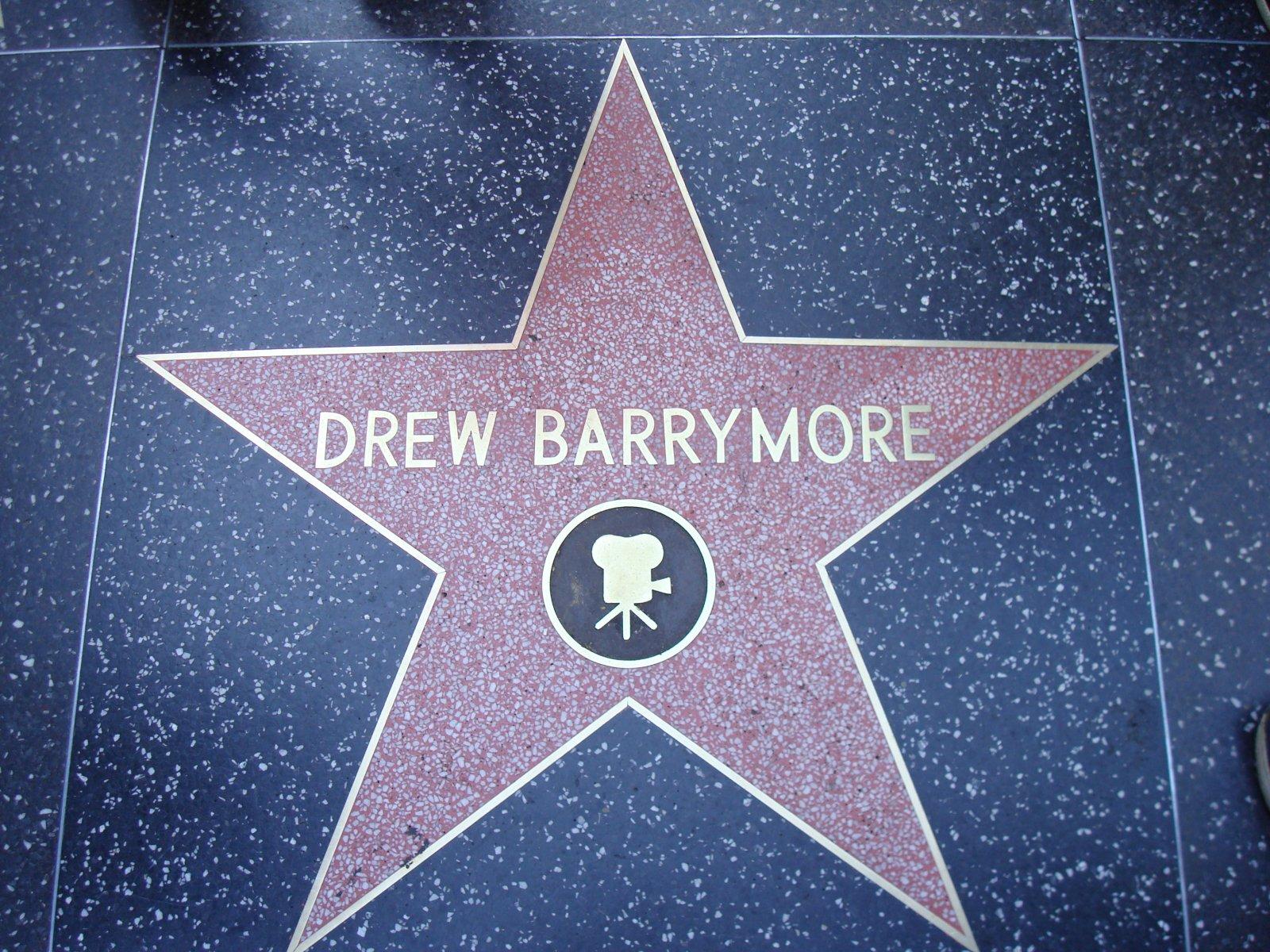
Actress Drew Barrymore’s star on the Hollywood Walk of Fame. Source: Neelix / Wikimedia Commons (Public Domain).
In pop culture, a star signifies fame, recognition, and public acclaim. We speak of stars of the silver screen, music, and the stage because this motif exceptionally well describes people who attract attention with their talent and charisma. The most tangible image of this logic remains the Hollywood Walk of Fame. A star embedded in the sidewalk is a symbol of lasting recognition. The artist’s name is inscribed into the city’s fabric, as if culture were saying that this talent has truly left its mark.
Such a star is a symbol of success, but also a projection of human dreams. Audiences view artists as those who shine brighter, live more intensely, and achieve what others can only dream of. In this context, a Hollywood star also symbolizes the pursuit of fulfillment and the realization of ideals—a ceaseless quest for perfection that inspires both artists and their fans.
Hollywood’s glamour does not stem solely from opulence. At its core lies a very ordinary human desire: to be noticed, named, and appreciated. That is why the star fits so well into stories of fame. It combines the beautiful promise, inspiration, talent, and the dream that someone will etch us into the memories of others. In the world of culture, this motif remains powerful because it touches on needs shared by nearly everyone.
Asterisk, or the star in text

Close-up of a laptop keyboard with an asterisk hidden under the number 8. Source: Castorly Stock / Pexels.
The smallest of stars resides in language. The typographic asterisk, or the * symbol, may seem like a trifle, but its significance can be immense. In text, it indicates a footnote, a clarification, a condition, or additional information. Such a symbol is easy to overlook, but hard to ignore, as it often changes the way an entire sentence is read. Even the smallest asterisk has the power to alter the meaning of a statement - it is a small asterisk with great power. According to dictionary definitions, such as those found on Wiktionary, the asterisk is also referred to as a 'star' due to its shape and function in text.
In this case, the star symbol serves an organizing function. It guides the eye, captures attention, and creates space for a note. In advertising, it’s often associated with fine print; in books, with a footnote; and in everyday communication, with a brief clarification of meaning. Such symbolism may be more technical, but it remains highly legible. A small symbol signals that there is a second layer alongside the main message.
Star symbols can be implemented in several ways in digital media and typography, and most star symbols render consistently across modern browsers and platforms. Some emoji variants of star symbols may appear colored depending on the platform, while standard Unicode stars typically render in monochrome and can be styled with CSS. Unicode has designated code points for half stars, which are often used for ratings and other applications. Classic Dingbats stars were designed as part of a set of over 1,000 symbols called Zapf Dingbats. Many star symbols are also used in mathematical and coding contexts, such as star operators.
This application perfectly illustrates how widely the star symbol functions. It can shine over a holiday table, guide you across the sea, signify fame, or appear on a keyboard as a practical symbol. In each of these roles, it remains a symbol of something important. Star symbols are grouped into categories based on their number of points and visual style, forming a recognized set of types in both digital and print contexts. That is precisely why even a typographic asterisk catches the eye so easily. Seemingly small, it truly carries immense significance.
Why does the star still inspire dreams?

In the end, we return to the family experience, because that’s where this theme resonates most strongly.
When the first star appears on a December evening, people don’t think about definitions. They think about loved ones, about warmth, about the table, and about the fact that something good is just beginning. That’s when it’s easiest to understand why the symbol of the star still resonates so strongly. It brings hope, organizes dreams, gives meaning, and leaves room for the future.
This motif has endured for centuries because it connects everyday life with something greater. The star symbolizes infinite possibilities and a spiritual purpose, inspiring the search for deeper meaning and personal growth. It allows us to speak of love, of community, of the journey, of effort, and of the fact that people need guiding signs through life. A star gives off a gentle light, and sometimes also the radiance of something that seems almost out of reach. That is precisely why it speaks so well of talents, ambitions, and the need to keep one’s own desire alive despite difficult moments.
One could say that a star helps people name what is often hard to grasp. It reminds us of the journey, of what transcends us, and of what remains close nonetheless. It returns home for the holidays. In culture and astronomy, it broadens our horizons. In jewelry, on flags, and in text, it becomes an everyday companion. And in the human heart, it remains as a quiet sign that even a small point can illuminate a very large space. A fuller understanding of the star’s symbolism allows us to perceive its deeper meaning in the world around us.