
War on Christmas. Who banned it and why?
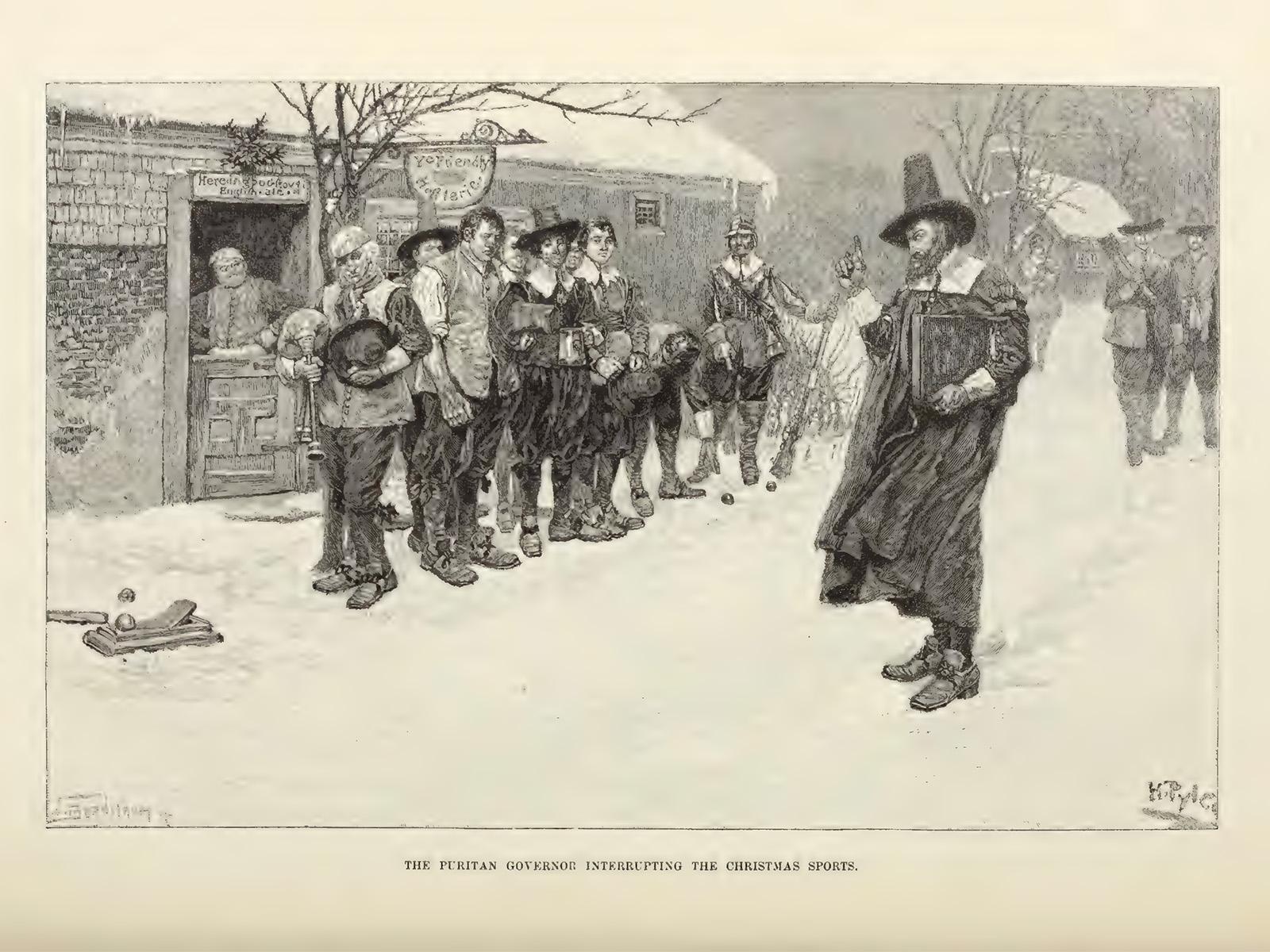
Today, it is hard to imagine December without decorations, the scent of festive food, and time spent with loved ones. And yet there was a moment in history when singing a carol, serving a Christmas meal, or decorating a branch could result in a fine. In the 17th century, Christmas officially disappeared from the calendar, and 25 December was meant to look like any other working day. No day off, no feasting, no festive spirit.
- In the 17th century, Christmas was formally banned in England and in the Massachusetts colony, and its celebration was treated as an offence. The issue was further complicated by the mixed nature of Christmas celebrations, which combined religious, secular, and pagan elements - customs that Puritans viewed as excessive and inappropriate. In 1647, Parliament abolished official Christmas observances, and 25 December was to be treated as an ordinary working day.
- The ban covered food, decorations, gatherings, and festive atmosphere. Shops were required to remain open, and both the military and local authorities intervened in cases of public celebration, leading to protests and riots in cities such as Norwich, Ipswich, and Canterbury. The issue of suppressing or reforming Christmas sparked significant controversy and debate within society.
- Although the bans were eventually lifted, their impact was long-lasting. This was especially true in Scotland and New England, where Christmas remained a marginal holiday for decades.
On 25 December 1647, there was no Christmas in London. Shops were ordered to stay open, work was expected to continue as normal, and any attempt at celebration was treated as an act of disobedience. The authorities set out to eliminate the holidays — for years to come, 25 December was meant to resemble any other working day.
The ban on Christmas was not a religious dispute confined to churches: it unfolded in streets, marketplaces, and private homes. The Puritan “war on holidays” was an attempt to impose order on the world by stripping it of its exceptional moments. And that is precisely why it provoked such fierce reactions.
Why did holidays vanish from the calendar? This is the story.
Table of contents:
- The return of Christmas after the Restoration of the monarchy
- Banned Christmas in the Massachusetts colony (New England)
- How the ban shaped modern celebrations of Christmas

Engraving “Street Scene in London – Winter Evening”. Author: Thomas Nast, Harper’s New Weekly Magazine, 2 April 1859 (public domain). Source: Internet Archive.
Why was celebrating Christmas considered undesirable?
The Puritans regarded Christmas as a mixed festival, combining religious, secular, and pagan elements. They saw the practice and observation of Christmas as a moral blend of folk traditions, pagan customs, and Roman Catholic influence. In the 17th century, the Christmas season looked very different from what we know today. Celebrations lasted a full twelve days (from 25 December to 6 January) and had a distinct character: loud, communal, and often uncontrolled. Feasting, music, alcohol, dicing, and public revelry were the norm - abuses that the Puritans suggested were derived from pagan or Catholic origins. For the Puritans - radical Protestants rooted in Calvinist thought and the broader Puritan movement - this way of life stood in direct opposition to moral discipline. The Puritans believed all days should be holy days, rejecting the idea of a special holiday set apart from others.
The Puritan opposition therefore had a social and cultural dimension. They were opposed to the observation of Christmas and other church festivals, believing that such religious observances encouraged excess, idleness, and disorder. The Puritans regarded Christmas as an abuse of church festivals and religious observances, and they suggested that these traditions were rooted in non-Christian practices.
They also criticised the date of 25 December itself, pointing out that it had only been established in the 4th century as a substitute for pagan winter solstice festivals.
Language also mattered. The word “Christmas” contained “mass”, which, in the eyes of the Puritans, referred to the Roman Catholic Mass. They preferred the term “Christ-tide”, avoiding anything associated with Catholic rituals or the old order. In their vision, 25 December should be a working day or a day of fasting — not a time for decorations and feasts.
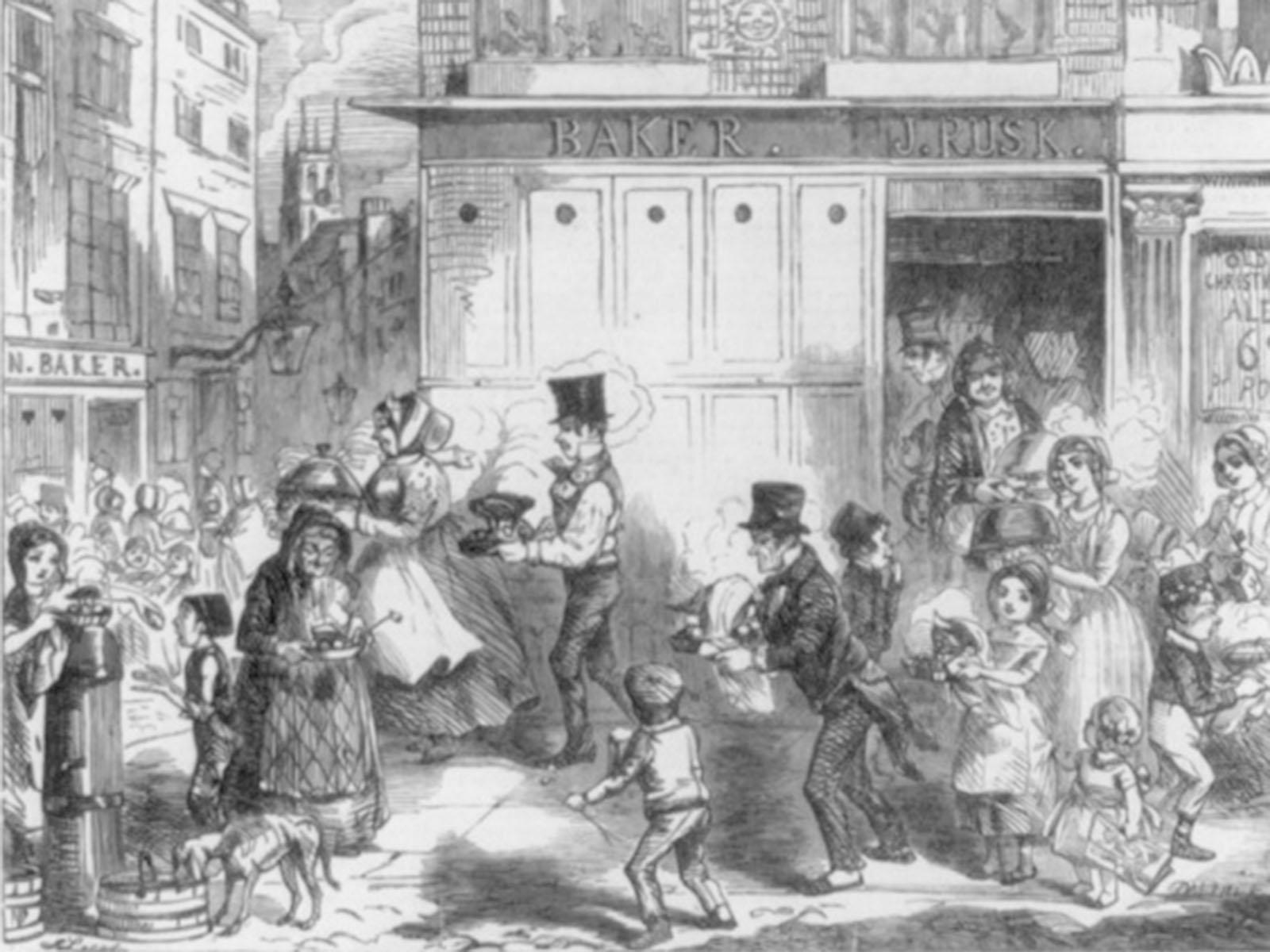
Illustration “Fetching home the Christmas dinner [from bakery]”. The Illustrated London News, 1848 (public domain). Source: Library of Congress.
The Puritan revolution and the war on holidays in England
Against this backdrop, the Puritans took radical steps in the mid-17th century. England was then engulfed in civil war (1642–1649) between supporters of King Charles I (Anglican Royalists) and supporters of Parliament, among whom the Puritans, led by Oliver Cromwell, played a dominant role.
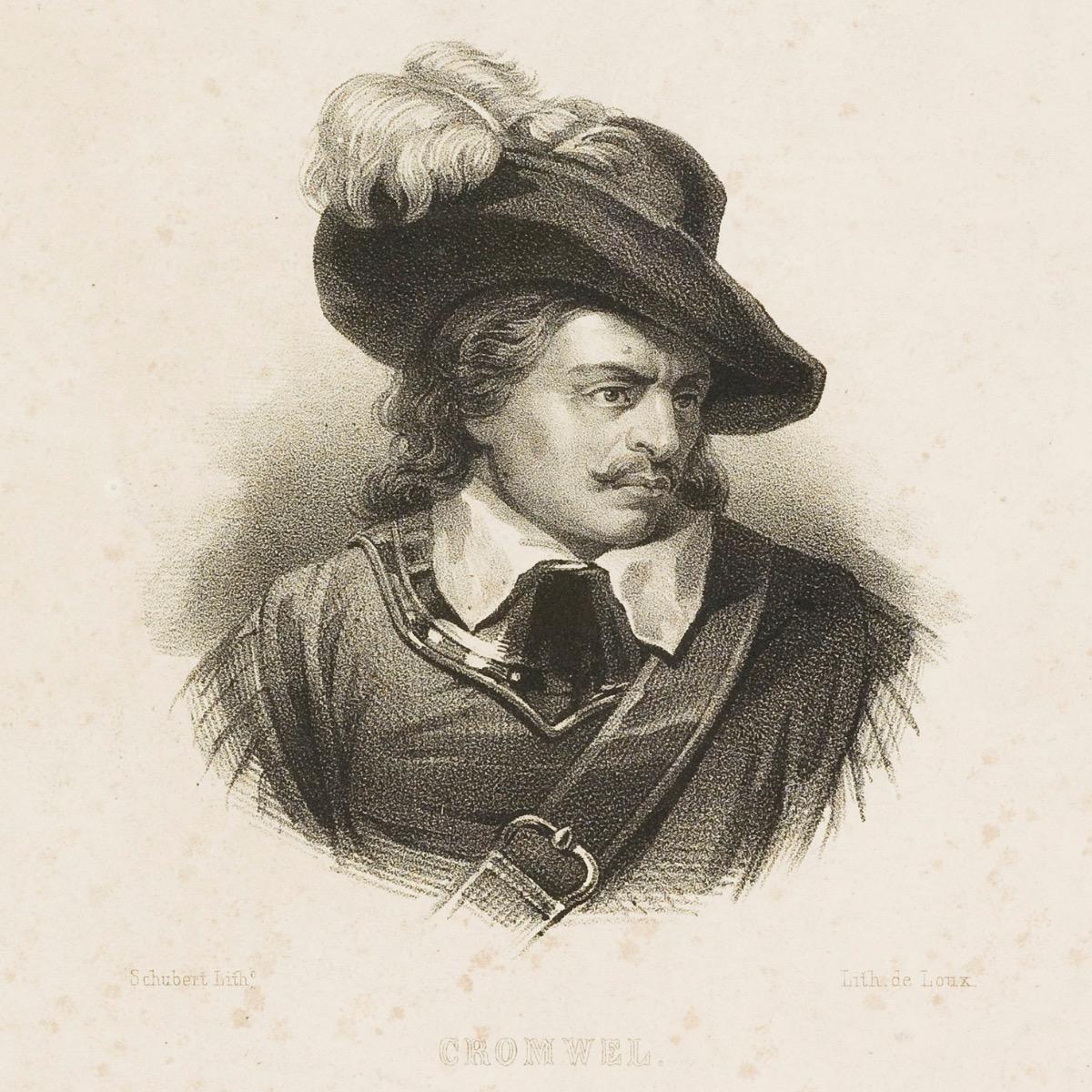
Engraving depicting Oliver Cromwell. Author: Schubert Loux, c. 1800 (public domain). Source: Europeana.
The scene of the dissolution of the Long Parliament captures the moment when Oliver Cromwell seized real power. In 1653, frustrated by prolonged debates, he entered the chamber with soldiers and forcibly brought parliamentary proceedings to an end.
This gesture symbolised the end of political compromise and the beginning of rule based on strict control. From that point on, order was imposed from above - affecting not only the structure of the state, but also the everyday lives of ordinary people, including how 25 December was to be spent. Cromwell's taking of power meant strict enforcement of the new laws, and the reach of the ban on Christmas celebrations extended across England.
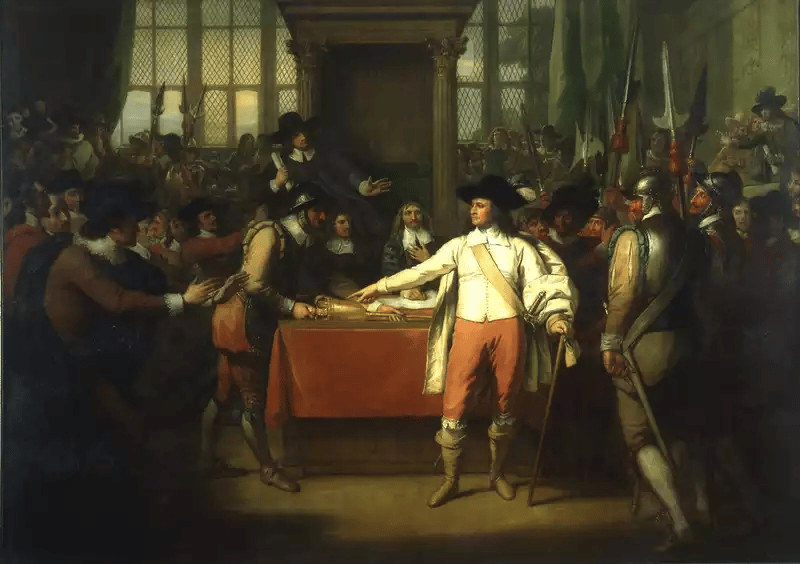
Painting “Oliver Cromwell Dissolving the Long Parliament”. Author: Benjamin West, 1782 (public domain). Source: Wikimedia Commons.
As early as December 1644, when 25 December fell on a parliamentary fast day, all Christmas celebrations were ordered to cease. In 1647, the Puritan-led English Parliament banned the celebration of Christmas. According to the law book of the time, the celebration of Christmas, Easter, and Whitsun was formally abolished. In its place, a day of fasting and national repentance was introduced.
Shops and markets were told to remain open, churches were closed, and soldiers of the New Model Army were sent to stop people from celebrating Christmas. Soldiers patrolled the streets, seizing food being prepared for Christmas celebrations and confiscating items related to the holiday. Traditional decorations like holly and ivy were banned, and the singing of carols was forbidden. Public feasting was treated as an offence, and punishment for violating the ban included fines and other penalties. The Puritans viewed Christmas as a popish festival with no biblical justification and a time of wasteful and immoral behavior. The law was severe, and its symbolic message unmistakable — Christmas was to disappear from public space.
Social resistance and unrest surrounding Christmas Day
The ban provoked a strong social reaction. As early as 1643, London apprentices protested against shops opening on Christmas Day. In the years that followed, tensions continued to rise. In 1646, a bloody altercation broke out in Bury St Edmunds after traders working on 25 December were attacked.
A year later, a wave of unrest swept through Norwich, Ipswich, and London. Students publicly expressed their attachment to tradition, while the military dispersed crowds. In Canterbury, rioters briefly seized control of the city, destroying shops that remained open during the holidays. The scale of the events was such that people jokingly referred to a “second civil war” sparked by Christmas.
Satirical pamphlets and ballads began to circulate, including the popular song “The World Turned Upside Down”, which mocked the fact that the Puritans had “killed” not only the king’s army, but also the holidays themselves. Despite patrols and prohibitions, many people continued the observation of Christmas customs in secret, and enforcement of the law was often selective. People still enjoyed festive gatherings and traditional merriment, even as they suffered persecution or hardship for their defiance. Despite the ban, many continued to celebrate Christmas secretly, and riots occurred in protest of the enforcement.
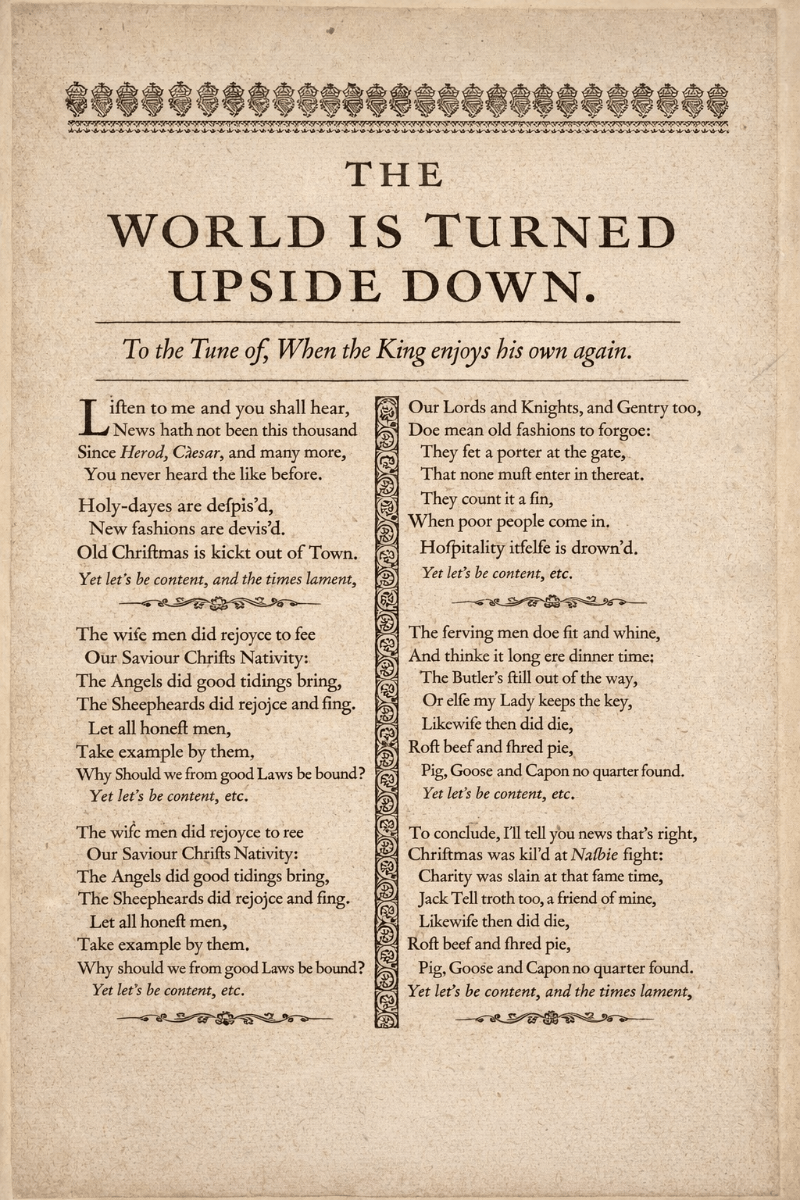
Reconstruction of a seventeenth-century ballad based on the text “The World Is Turned Upside Down” (London, 1646; Thomason Tracts, British Library), which is in the public domain. Layout and typography have been reconstructed.
The return of Christmas after the Restoration of the monarchy
Oliver Cromwell entered history as a symbol of an era defined by severity and control, even though the ban on Christmas was not solely his personal decision. Still, his figure is most often associated with the moment when the state extended its authority into the everyday lives of ordinary people. In collective memory, he remains the face of a time when joy was treated as a problem and holidays as a threat to order.
After Cromwell’s death and the collapse of the republic, the monarchy was restored in 1660, marking the return of the throne and royal authority. Charles II almost immediately repealed the Puritan moral restrictions and reinstated Christmas in the calendar. The influence of royalty played a significant role in reviving and reinforcing Christmas traditions, as royal events and celebrations helped reestablish the holiday as a central and state-sanctioned occasion. Seeking to distance himself symbolically from the austerity of his predecessors, Charles II earned the nickname “the Merry Monarch”.
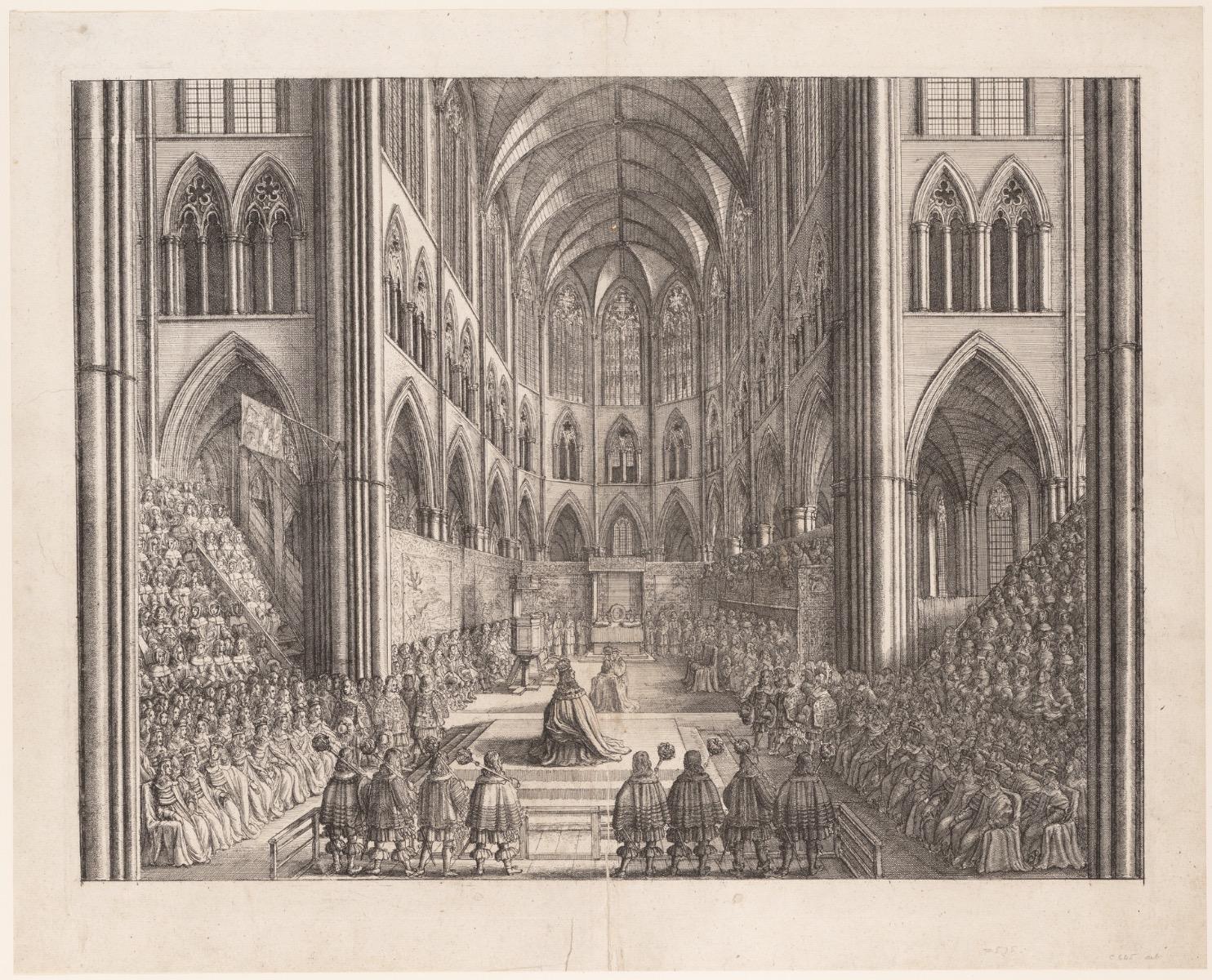
Engraving “The Coronation of King Charles the II in Westminster Abbey, April 23, 1661”. Author: Wenceslaus Hollar, 1662 (public domain). Source: The MET Collection.
In England, the ban on Christmas lasted only a few decades and soon became a historical curiosity. Traditions returned, and in the 19th century - especially during the Victorian era - Christmas experienced a true revival as a family-centred celebration.
Banned Christmas in the Massachusetts colony (New England)
The Puritan approach was also transplanted to North America. In the Massachusetts colony, 25 December was treated as an ordinary day, and the holiday was disparagingly referred to as “Fools’ Day”. In 1659, the Puritan government of the Massachusetts Bay Colony banned Christmas, imposing fines for its observance. The law, recorded in official legal books of the time, specified that anyone who celebrated Christmas through feasting, refraining from work, or any other form of observance would face punishment in the form of a five-shilling fine.
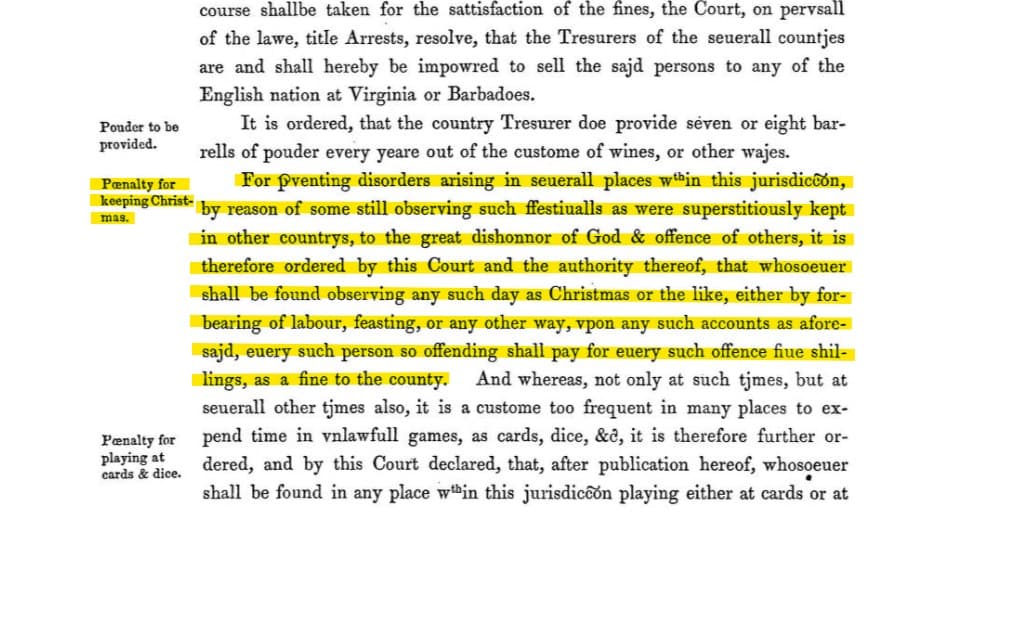
Excerpt from the records of the Governor and Company of the Massachusetts Bay in New England (public domain). Source: Internet Archive.
The ban remained in force until 1681. Although quiet, private observances were rarely punished, the law effectively discouraged any form of public celebration. Only political pressure from England, following the Restoration of the monarchy, forced the colony to repeal the ban. The mindset, however, endured.
Engravings depicting everyday life in New England reveal a world built around work, craftsmanship, and self-discipline. Each day was meant to be useful and productive, with little room for exceptions. Within such a rhythm, Christmas had no natural place, and celebration appeared less as a necessity than as an unnecessary disruption.
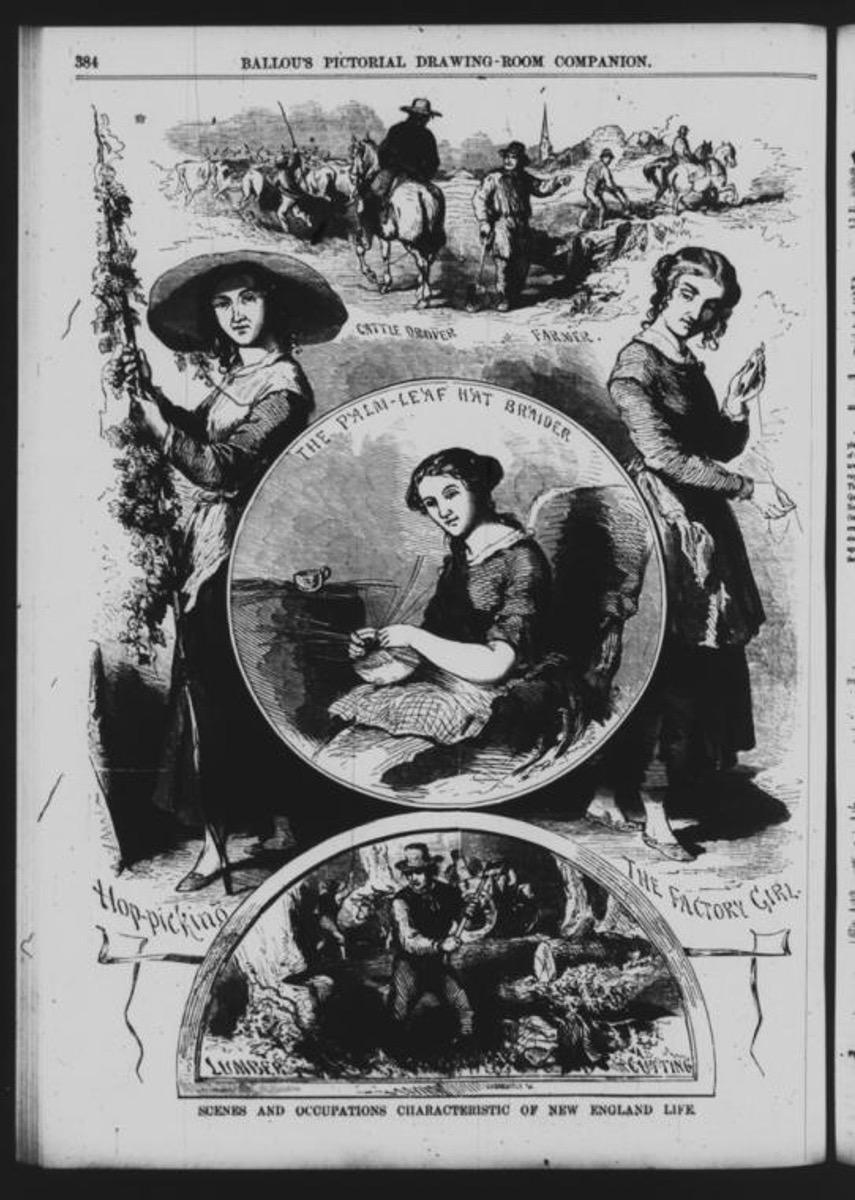
Illustration “Scenes and occupations characteristic of New England life”. Author: Maturin M. Ballou, Gleason’s Pictorial Drawing-Room Companion, 1855 (public domain). Source: The New York Public Library Digital Collection.
Even in the 18th century and the early 19th century, 25 December in Boston could still be a normal working day. It was not until 1856 that Massachusetts recognised Christmas as a public holiday, and in 1870 it became a federal holiday in the United States.
How the ban shaped modern celebrations of Christmas
The history of banned Christmas reveals something both simple and deeply human. Holidays are not merely dates on a calendar or a collection of customs. They are moments when the world slows down for a while, and people remember the importance of being close to one another.
That is why celebration always returned — sometimes quietly, behind closed doors, sometimes stubbornly, in defiance of prohibition. Even in the harshest times, people needed one evening each year that escaped the rules of work and control. A moment when home mattered more than order, and togetherness more than regulations.
Today, Christmas is once again a time of closeness and calm. For some, it begins with the first decoration; for others, with the scent of food; for children, with anticipation; and for adults, with the relief of being able to slow down, even briefly. Perhaps this is what Christmas is truly about: a shared table, a moment of peace, and the reminder that we matter to one another.
Let’s celebrate together!
Main image:
Illustration “The Puritan Governor Interrupting the Christmas Sports”. Author: Howard Pyle, Harper's New Monthly Magazine, Vol. 68, December 1883 to May 1884 (public domain). Source: Internet Archive.
Sources: