
Historical Christmas food. Christmas menus from centuries past that sound unbelievable today
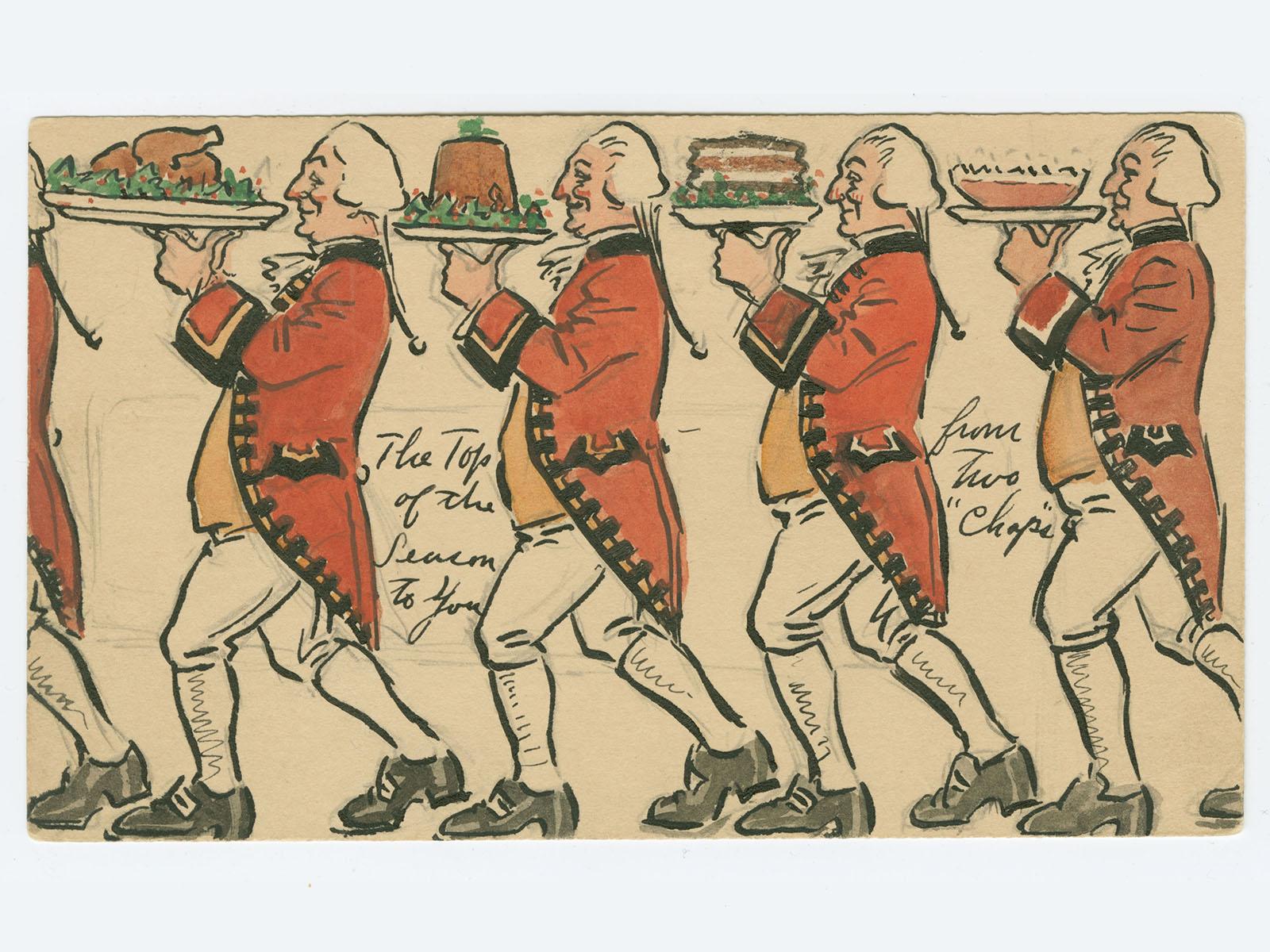
If you want to taste what Christmas was like centuries ago, you need to forget modern habits for a moment. We travel to England, France, Italy, Portugal, and Norway, where Christmas menus once featured birds hidden inside birds, a soup pretending to be turtle, and a dessert shaped like a vampire fish. For many, the nostalgia of these historical Christmas foods brings back warm memories of festive gatherings, and there is a fond appreciation for the unique and sometimes extravagant dishes that defined holiday celebrations in the past.
- Historical Christmas menus were often about status, ceremony, and symbolism before they were about satiety. Dishes were meant to impress with their form, the origin of their ingredients, and the sheer amount of labour hidden in the kitchen. The earliest known published Christmas menu included a remarkable variety of meats such as pork, beef, goose, and venison, as well as oysters and even swan, reflecting the grandeur and diversity of festive tables in earlier centuries.
- The disappearance of many dishes resulted from practical changes, rising costs, limited availability, and shifting ethical standards. As a result, Christmas began to reward simplicity, predictability, and convenience. Historical menus from the 17th century to the 20th century show a clear evolution in the types of meats and side dishes served, illustrating how tastes and traditions adapted over time.
- Although most of these dishes will never return to the table in their original form, their stories reveal how festive abundance was once understood. They also show that “tradition” can change faster than we like to think.
For centuries, Christmas was a culinary stage where making an impression mattered. European tables featured monumental, sometimes even provocative dishes, built in layers like a story and served with ceremony that today feels closer to theatre than to a family dining room.
Some festive dishes were created like trophies. They were carried in with pride, placed at the centre of the table, and conversations revolved around a single question: how was this even made? That is precisely why many of these dishes disappeared. They were too expensive, too time-consuming, too heavy, or simply incompatible with modern sensibilities. Looking back at menus from centuries past shows what had to vanish when life accelerated and Christmas moved from banquet halls into ordinary homes.
The introduction of artificial Christmas trees in the 20th century coincided with changes in Christmas dinner traditions, as families sought to create festive atmospheres with less maintenance and adapted their holiday meals to fit new lifestyles.
Table of contents:
-
Yorkshire Christmas Pie. A culinary matryoshka from northern England
-
Turtle soup and mock turtle soup. Luxury that had to be imitated
- French capon. Meat for those who celebrate late
- Capitone. The Italian eel at year’s end
- Lampreia de ovos. A dessert that looks like a fish
- Lutefisk. A Nordic Christmas tradition with the taste of cod
Yorkshire Christmas Pie. A culinary matryoshka from northern England
This dish was grand in every possible sense. Yorkshire Christmas Pie resembled an enormous decorative pie, with layers of meat arranged so that the first cut revealed a cross-section worthy of a display case. As a classic example of festive abundance, cooks stacked pigeon, partridge, duck, pheasant, capon, goose, and sometimes even turkey, hiding spices, forcemeats, and fats between the layers to bind everything into a single “block” of festive abundance. The effect worked as a culinary surprise: bird inside bird, meat within meat, Christmas within Christmas.
A list of meats such as pigeon, partridge, duck, pheasant, capon, goose, and turkey was not uncommon in historical English Christmas menus, reflecting the lavish variety expected at the holiday table.
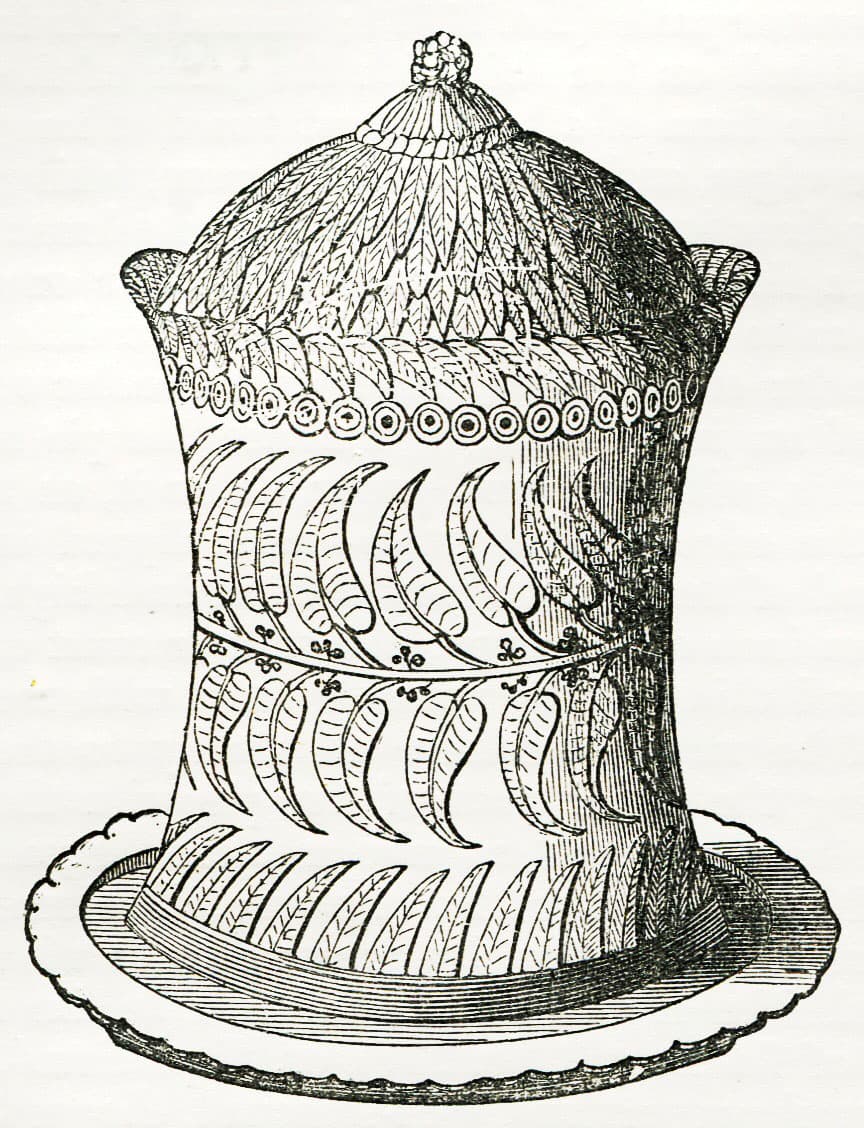
Francis Francatelli, “Yorkshire or Christmas Pie”, 1886 (public domain). Source: Wikimedia Commons.
This was not an everyday dish, not even a Sunday one. It appeared mainly in English courts and wealthy households. A pie like this signalled that the host could afford multiple kinds of meat, had access to game, and employed someone capable of controlling culinary chaos. In practice, preparation required time, space, and logistics. Some meats needed pre-seasoning, others partial roasting. The pastry had to withstand weight and heat while remaining decorative, because presentation was part of the dish.
In historic cookbooks, the dish appears as early as the 18th century. Instructions for preparing Yorkshire Christmas Pie were recorded by Hannah Glasse in her 1747 book The Art of Cookery Made Plain and Easy.
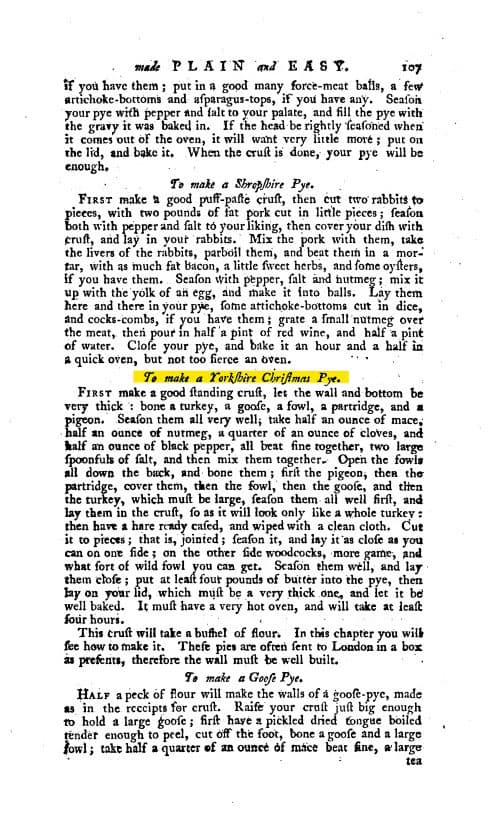
Hannah Glasse, “The Art of Cookery Made Plain and Easy”, 1747 (public domain). Source: Internet Archive.
The book’s title itself offers an important clue. Yorkshire Christmas Pie belonged to a style of Christmas where culinary architecture mattered. By the Victorian era, turkey had become the centerpiece of Christmas dinners in England, replacing goose as the traditional main dish. In the 17th century, English Christmas dinners featured a variety of meats, including roast beef, turkey, and swan, along with numerous side dishes and desserts. When festive meals stopped being a display of wealth and became a domestic ritual, no one wanted to build towers like this anymore.
Classic turtle soup and mock turtle soup. Luxury that had to be imitated
In 19th-century Britain, luxury could begin with a spoon. Turtle soup appeared at lavish dinners as a signal of social status. Its prestige came not only from flavour, but from the journey its main ingredient had taken. Imported from the colonies, turtle meat symbolised global connections and money spent on something entirely unnecessary. On a menu, it promised abundance, novelty, and stories worth telling.
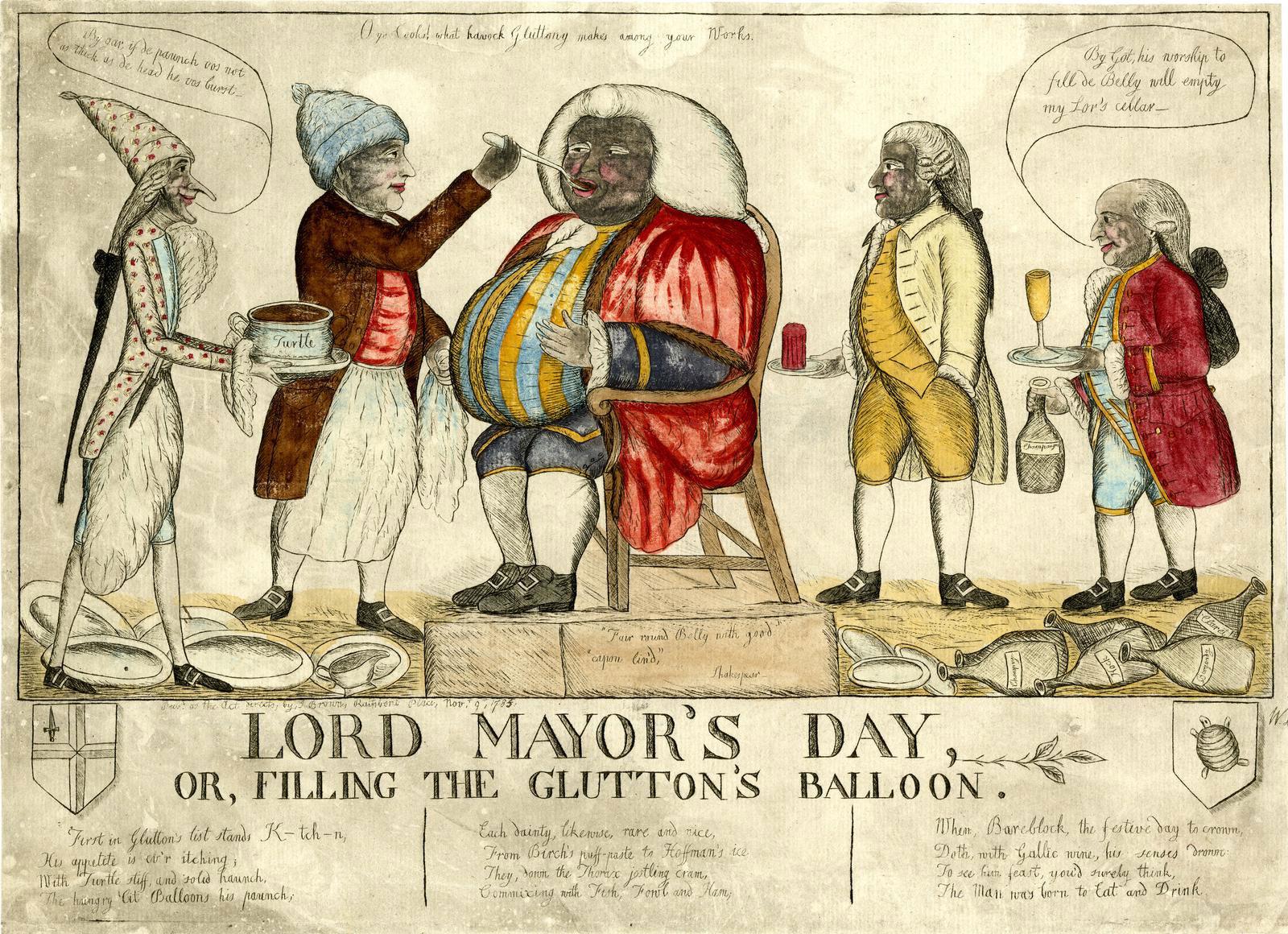
Historical engraving “Lord Mayor’s Day, or, Filling the Glutton’s Balloon”, c. 19th century (public domain). Source: British Museum / Wikimedia Commons.
Over time, turtles became expensive and harder to obtain. That is when a clever compromise emerged: mock turtle soup. This was a dish that imitated luxury while quietly making a joke of it. Instead of turtle meat, cooks used calf’s head or veal offal, as their texture and certain flavour notes could approximate the original. What mattered most was the impression: a thick, rich soup served in a way that made guests feel part of “grand cuisine”, even if the key ingredient had been replaced.
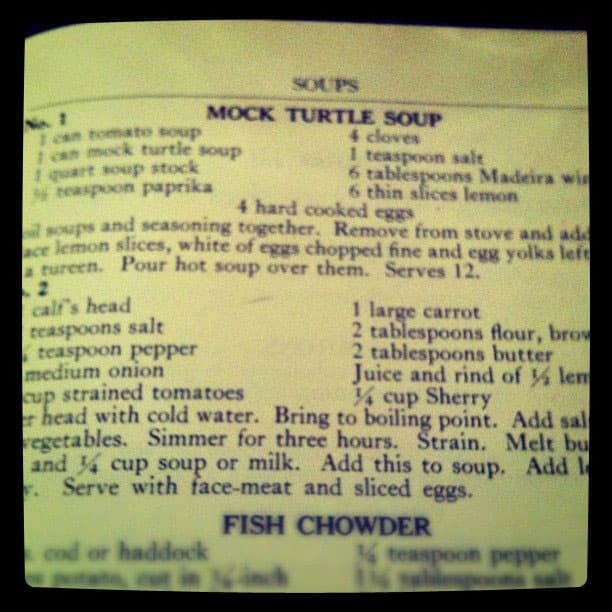
Excerpt from a cookbook with a recipe for mock turtle soup. Photo by Jules Morgan – julesjulesjules m (CC BY 2.0). Source: Flickr.
This motif resonated strongly in culture. In Alice’s Adventures in Wonderland, the character of the Mock Turtle appears, and the soup itself became part of the era’s humour. It is a perfect example of how dishes live beyond the kitchen. When they disappear from tables, they sometimes survive as metaphors.
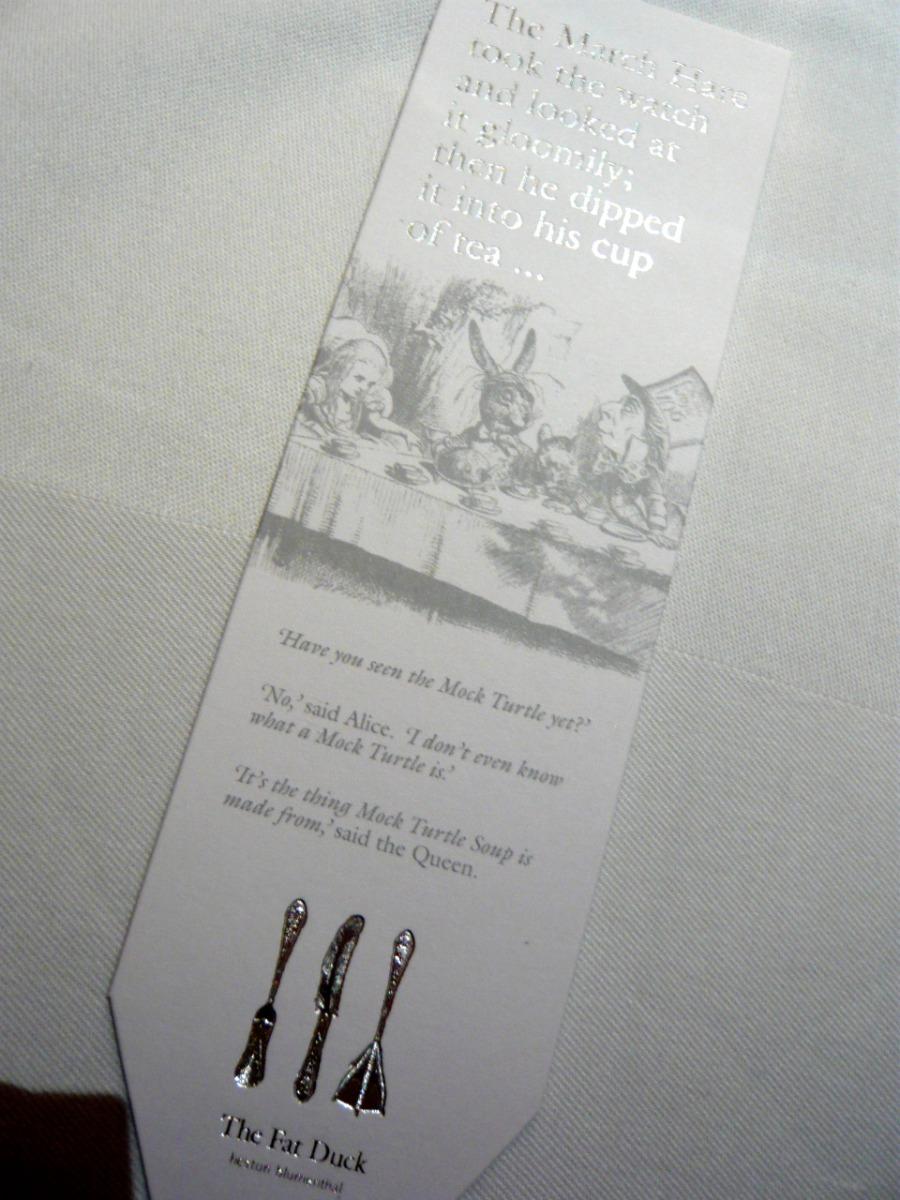
Quote from “Alice’s Adventures in Wonderland”. Photo by WordRidden (CC BY 2.0). Source: Flickr.
Roasted boar’s head. A festive symbol of celebration with ceremony
From the Middle Ages onward in England, a decorated boar’s head symbolised prosperity, hunting power, and festive abundance that could be placed quite literally at the centre of the table. In a sense, it functioned as a decoration — edible, aromatic, and commanding respect.
The head itself was often more ritual than meal. Wild boar meat was more commonly used in pâtés, stuffings, and roasts that were easier to portion and serve. The head, however, was prepared for impact. It was meant to “enter” the hall and create a moment of silence.
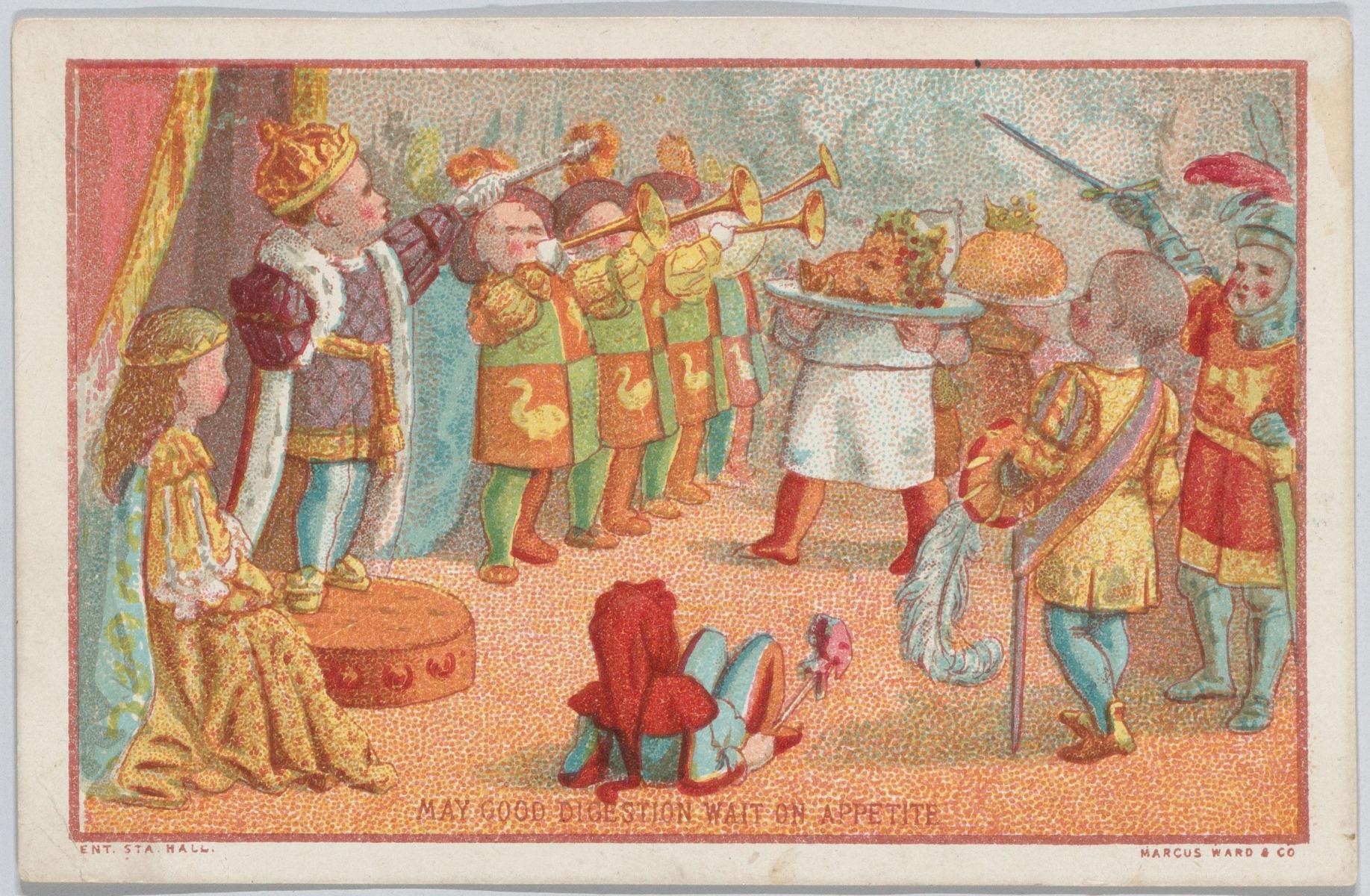
Card “Valentine”, unknown author, c. 1874 (public domain). Source: The Metropolitan Museum of Art.
Indeed, in the academic tradition of Queen’s College, Oxford, the presentation of the boar’s head marked the climax of the Christmas feast. It was carried in on silver platters, accompanied by trumpets and carol singing, including the song known since the 16th century as “The Boar’s Head Carol”.
Why did the tradition disappear? Because the role of the table changed. Modern Christmas celebrations rarely require such literal symbols. Comfort, aesthetics, and ease of serving now matter more. And a boar’s head, while historically fascinating, would demand not only courage but an entirely different setting.
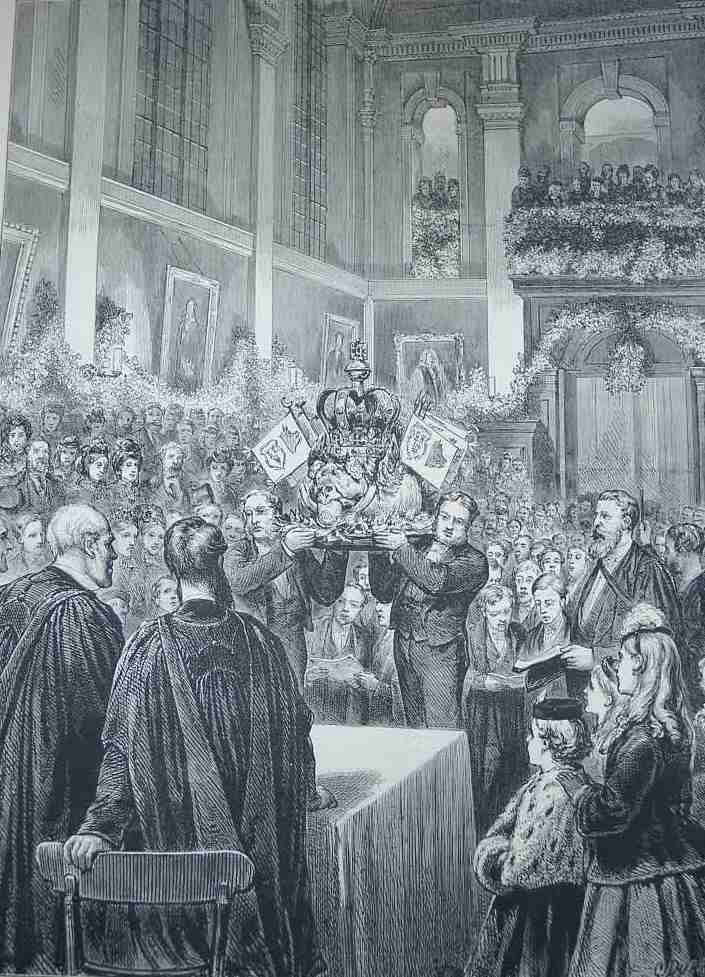
Godefroy Durand, “Serving up the Boar’s Head at Queen’s College, Oxford, on Christmas Day”, 1873 (public domain). Source: The Graphic / Wikimedia Commons.
French capon. Meat for those who celebrate late
In many parts of France, the culmination of Christmas celebrations after midnight mass was the repas gras — a late-night, rich meal featuring meats, game, and wine. It served as a reward after fasting and long preparations. A central role was played by the capon, a young rooster prized for its tender, juicy meat, superior to ordinary poultry. The capon also offered a practical advantage: it could be served whole, beautifully browned, as the focal point of the table.
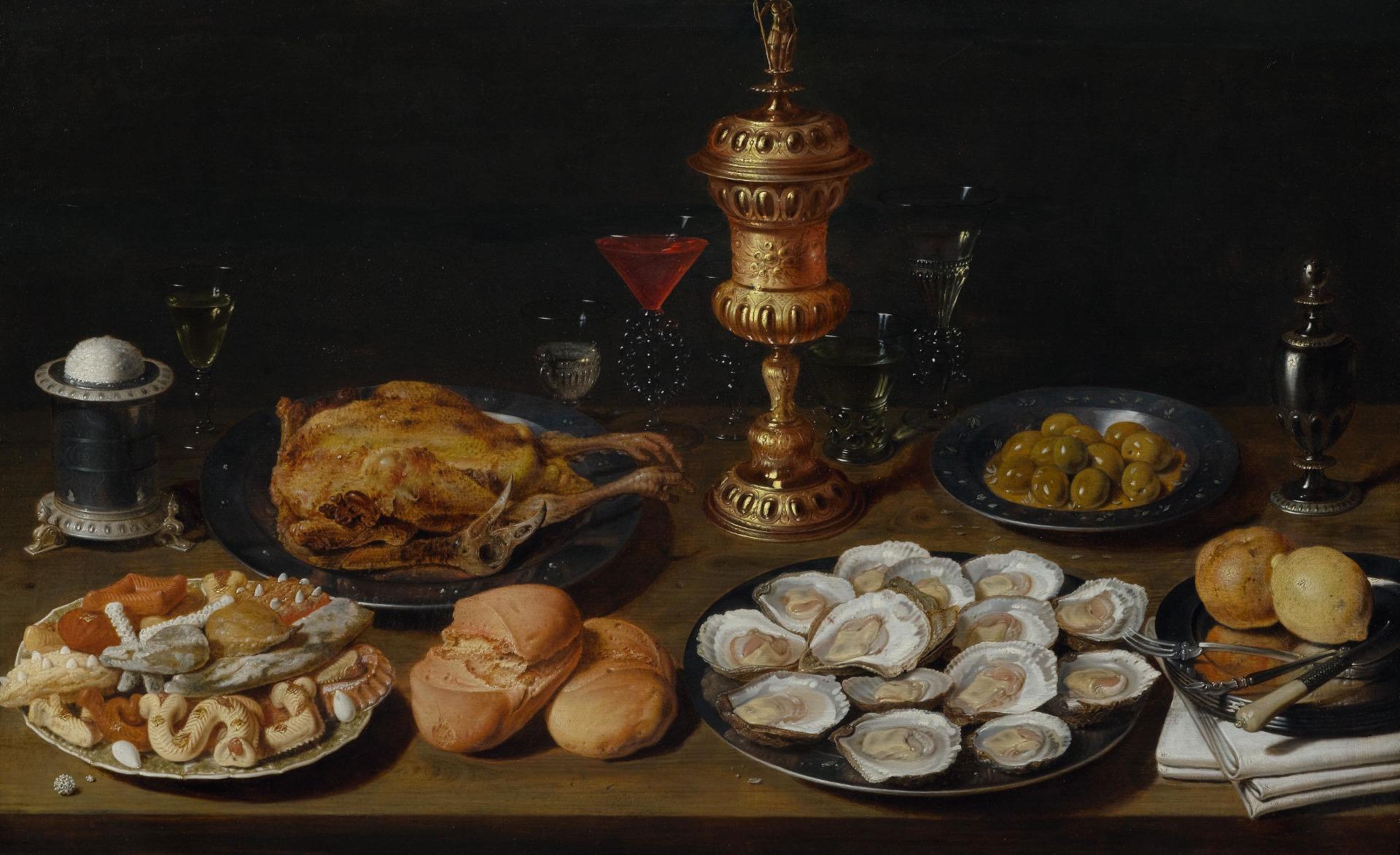
David Rijckaert (II), “Still life with capon, oysters, bread, pastries, various glasses and a goblet”, c. 1616–1642 (public domain). Source: Wikimedia Commons.
What such a capon might look like was illustrated by Charles Elmé Francatelli in his 1846 book The Modern Cook. The roasted capon appeared surrounded by courtly accompaniments: mushrooms, truffles, crayfish tails, and even small meatballs.
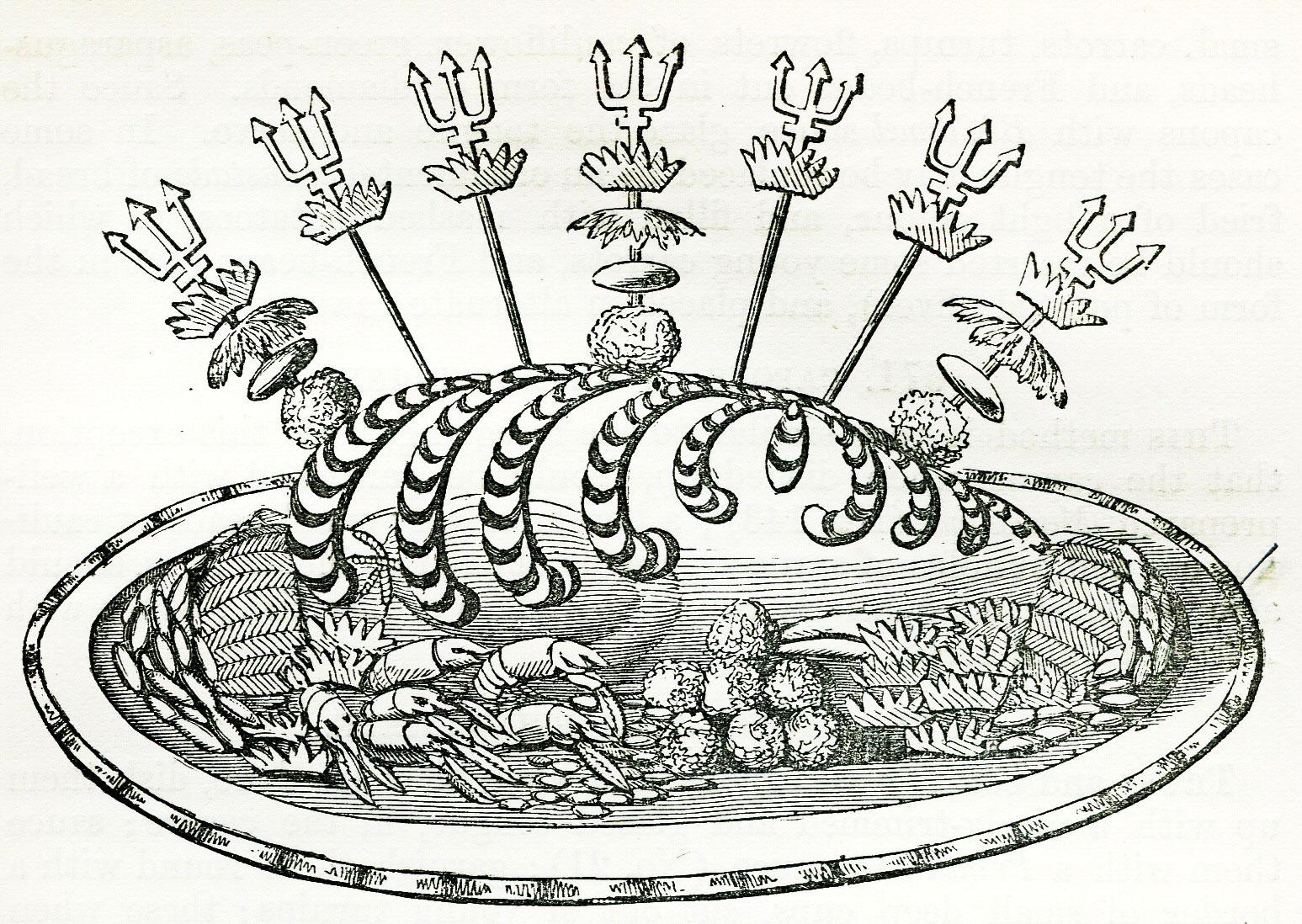
Engraving “Capon à la Godard” from The Modern Cook by Charles Elmé Francatelli, 1886 (public domain). Source: Wikimedia Commons.
The decline of capon in everyday Christmas meals does not mean it vanished entirely — it simply lost its mass appeal. Modern tables tend to favour dishes that are easy to buy and roast without hours of sauce-watching. Capon requires a different pace. And historic French cuisine knew no shortcuts.
Capitone. The Italian eel at year’s end
In many regions of Italy, especially in southern Italy, eel marked the closing of the year. Capitone, often deep-fried or stewed in tomatoes, appeared on Christmas Eve tables, particularly in Campania, Sicily, and Rome. Its symbolism was clear: the eel resembles a snake, and the snake is associated with evil. Eating it was meant to signify the defeat of evil.
By the late 19th century, accounts described live eels being sold en masse across Italy before Christmas. Fish markets in Naples reportedly resembled a crush, as everyone wanted at least a piece of eel — without it, Christmas Eve felt incomplete.
Typical Christmas dishes in Italy vary by region: in southern Italy, fried capitone eel is a staple, while in northern Italy, poultry and other local specialties are often featured on Christmas Eve or Christmas Day tables. The Christmas Eve meal in Italy is known as the Feast of the Seven Fishes, featuring a variety of fish dishes, while the Christmas Day meal traditionally includes a variety of pasta dishes and is often accompanied by panettone for dessert.
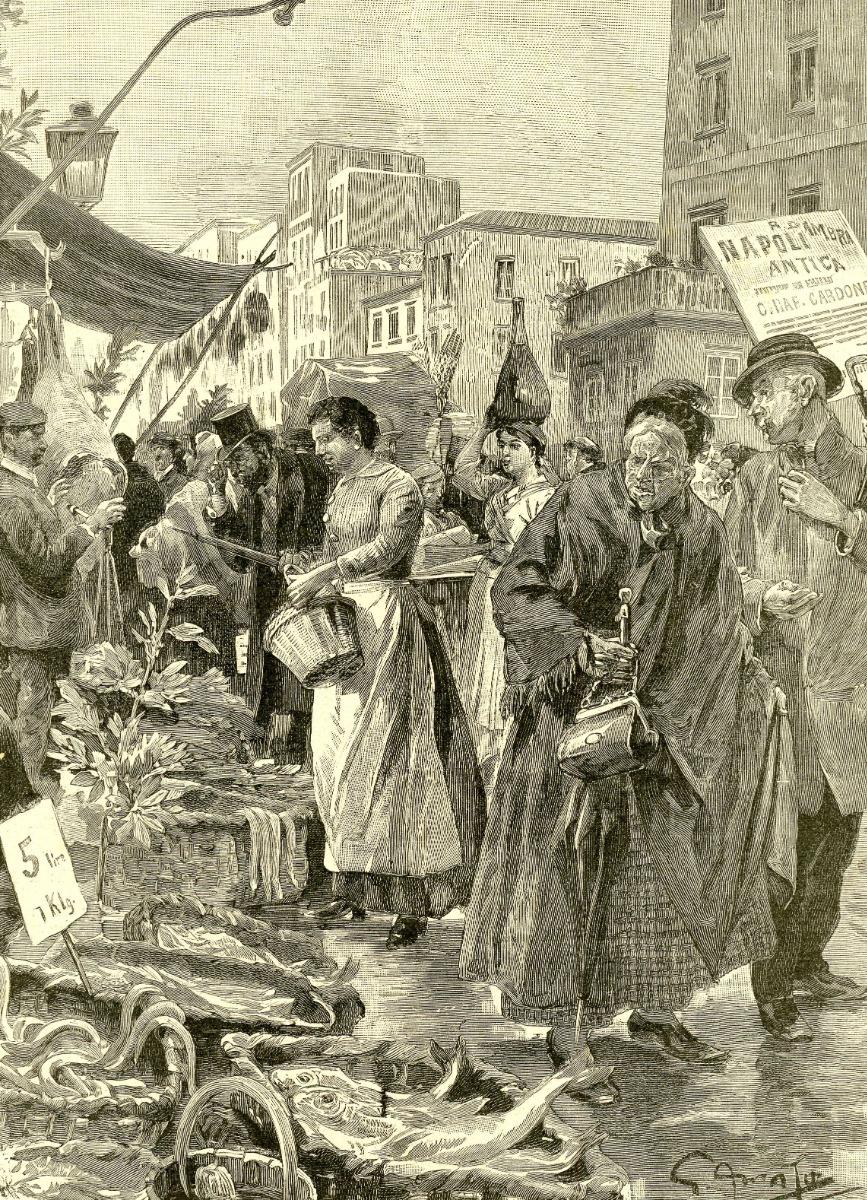
Gennaro D’Amato, woodcut “Il Natale a Napoli – La vendita del capitone” from L’illustrazione popolare, Milan 1891 (public domain). Source: Wikimedia Commons.
Why is capitone less common today? Eels quickly became very expensive and are now classified as endangered. In many households, the tradition is maintained by older generations, while younger ones opt for lighter, simpler solutions. Even so, capitone remains one of the most distinctive symbols of Italian Christmas, especially where family memory outweighs trends.
Lampreia de ovos. A dessert that looks like a fish
Portuguese lampreia de ovos can surprise even those who have seen many Christmas tables. This dessert, eaten on 25 December, is shaped to resemble a lamprey, a highly distinctive fish. Lampreys have elongated bodies and a characteristic suction mouth with teeth, earning them the nickname “vampire fish”.
Why turn a fish into a dessert? Because lampreys were historically a delicacy for the elite in Portugal. In the Middle Ages, they were considered exceptional, and their presence in the kitchen carried clear class associations.
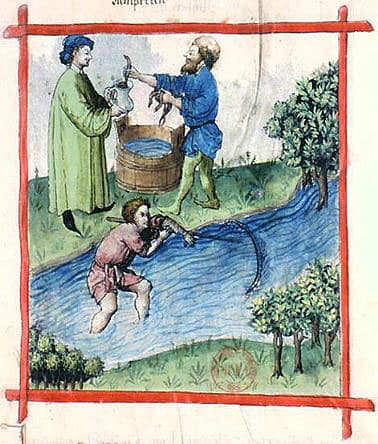
Lamprey fishing in a stream, illustration from Tacuinum Sanitatis, 15th century (public domain). Source: Wikimedia Commons.
Today, lamprey is more commonly a spring dish, tied to the season of their migration into Portuguese rivers such as the Minho. In spring, Portugal hosts dedicated culinary events celebrating lamprey.
What does lampreia de ovos look like? The dessert is designed to resemble a real fish twisting on a platter. The tradition has survived by transforming into confectionery art. The Portuguese table preserved the symbol, but in a sweet, harmless form.
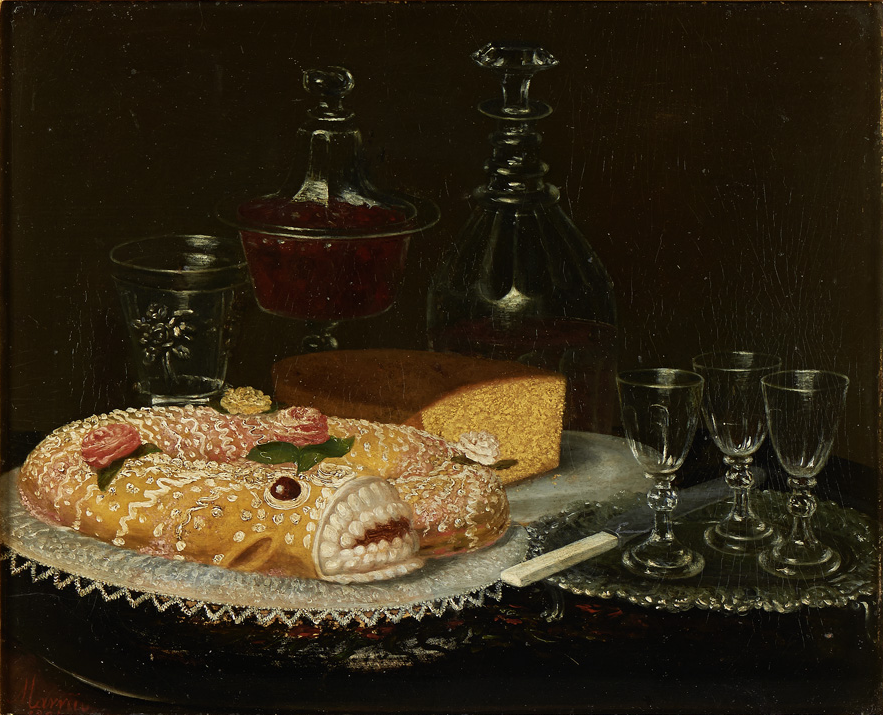
Lucas de Almeida Marrão, “Mesa com lampreia de ovos, pão de ló, garrafa, bombonière, copos e salva”, 1884 (public domain). Source: Wikimedia Commons.
Lutefisk. A Nordic Christmas tradition with the taste of fish
Lutefisk proves that Christmas traditions can endure even when they sound like a culinary challenge. It is dried cod soaked in a lye solution, then thoroughly rinsed and cooked. After this process, the fish becomes semi-transparent and gelatinous, with a texture that provokes extreme reactions. It is served with boiled potatoes, peas, and bacon cracklings — a classic mixture of accompaniments that add richness and offset the fish’s unusual consistency.
In Norway, lutefisk is considered a very old Christmas dish, rooted in food preservation under harsh climatic conditions. When fresh products were scarce in winter, drying fish and later preparing it offered a practical response to reality. That practicality eventually became tradition. Dried fruits are also a traditional component of Christmas foods in northern Europe, often featured in desserts or as part of festive side dishes.
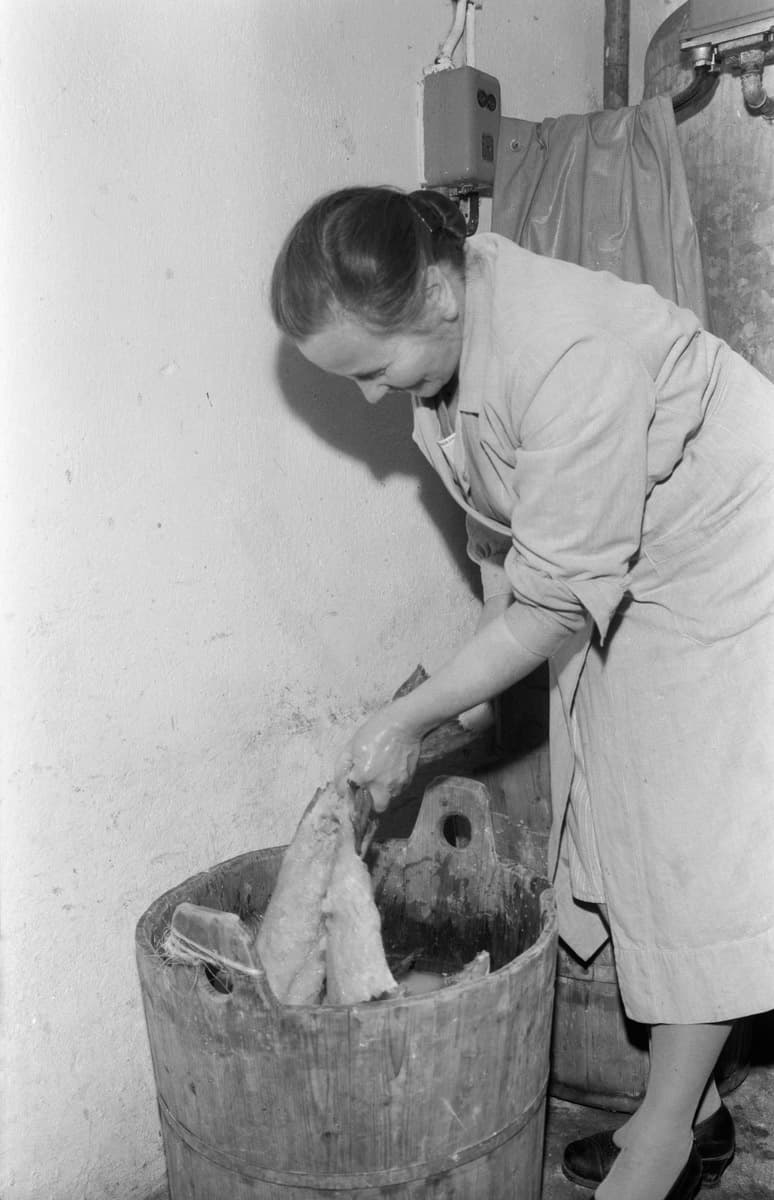
Preparations for Christmas in a Finnish village. Mrs Aune Lampinen prepares the festive dish lutefisk in the rural municipality of Porvoo on 18 December 1958. Author: Erkki Voutilainen, Finnish Heritage Agency (CC BY 4.0). Source: Europeana.
Main image:
Historical illustration (public domain). Source: Digital Collections, The New York Public Library.